Science Score: 44.0%
This score indicates how likely this project is to be science-related based on various indicators:
-
✓CITATION.cff file
Found CITATION.cff file -
✓codemeta.json file
Found codemeta.json file -
✓.zenodo.json file
Found .zenodo.json file -
○DOI references
-
○Academic publication links
-
○Academic email domains
-
○Institutional organization owner
-
○JOSS paper metadata
-
○Scientific vocabulary similarity
Low similarity (11.7%) to scientific vocabulary
Keywords
Repository
ANOVA-Simultaneous Component Analysis
Basic Info
Statistics
- Stars: 1
- Watchers: 1
- Forks: 0
- Open Issues: 0
- Releases: 1
Topics
Metadata Files
README.md
ASCA: ANOVA-Simultaneous Component Analysis in Python
Table of Contents
About The Project
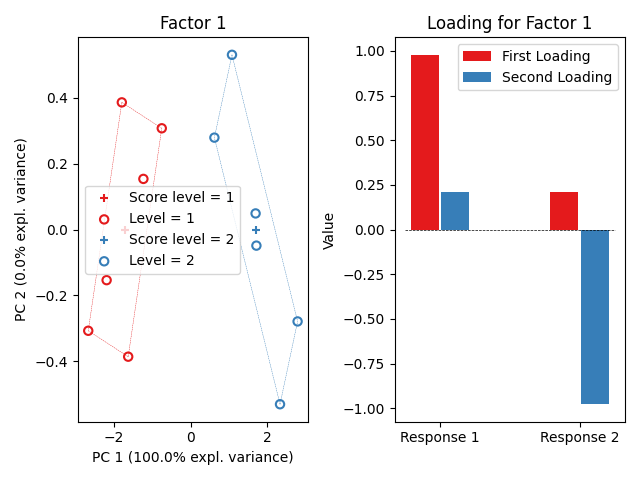
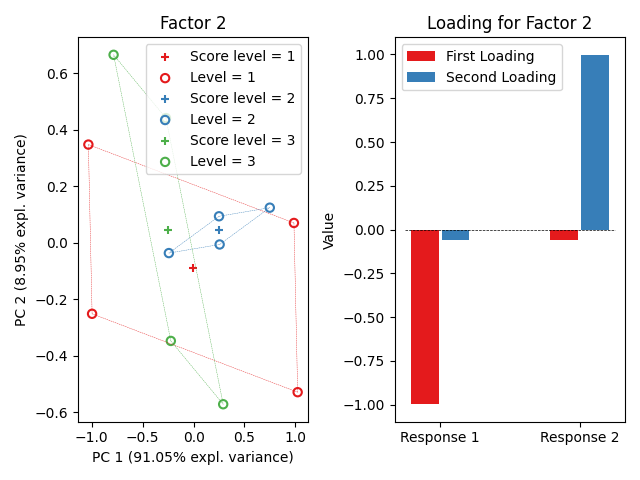
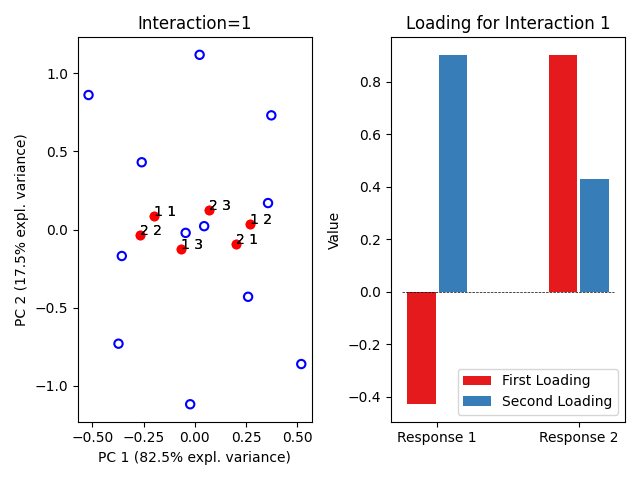
ASCA is a multivariate approach to the standard ANOVA, using simultaneous component analysis to interprete the underlying factors and interaction from a design of experiment dataset. This project implements ASCA in python to support open source development and a wider application of ASCA.
Getting Started
Install this library either from the official pypi or from this Github repository:
pip install ASCA
Install most updated version from Github
In a environment terminal or CMD:
bat
pip install git+https://github.com/tsyet12/ASCA
Simple Example
```python
X = [[1.0000,0.6000],
[3.0000,0.4000],
[2.0000,0.7000],
[1.0000,0.8000],
[2.0000,0.0100],
[2.0000,0.8000],
[4.0000,1.0000],
[6.0000,2.0000],
[5.0000,0.9000],
[5.0000,1.0000],
[6.0000,2.0000],
[5.0000,0.7000]]
X=np.asarray(X)

F = [[1,     1],
 [1,     1],
 [1,     2],
 [1,     2],
 [1,     3],
 [1,     3],
 [2,     1],
 [2,     1],
 [2,     2],
 [2,     2],
 [2,     3],
 [2,     3]]
F=np.asarray(F)
interactions = [[0, 1]]

ASCA=ASCA()
ASCA.fit(X,F,interactions)
ASCA.plot_factors()
ASCA.plot_interactions()
```
Contributing
Contributions are what make the open source community such an amazing place to be learn, inspire, and create. Any contributions you make are greatly appreciated.
- Fork the Project
- Create your Feature Branch (
git checkout -b testbranch/prep) - Commit your Changes (
git commit -m 'Improve testbranch/prep') - Push to the Branch (
git push origin testbranch/prep) - Open a Pull Request
License
Distributed under the Open Sourced BSD-2-Clause License. See LICENSE for more information.
Contact
Main Developer:
Sin Yong Teng sinyong.teng@ru.nl or tsyet12@gmail.com Radboud University Nijmegen
References
Smilde, Age K., et al. "ANOVA-simultaneous component analysis (ASCA): a new tool for analyzing designed metabolomics data." Bioinformatics 21.13 (2005): 3043-3048.
Jansen, Jeroen J., et al. "ASCA: analysis of multivariate data obtained from an experimental design." Journal of Chemometrics: A Journal of the Chemometrics Society 19.9 (2005): 469-481.
Acknowledgements
The research contribution from S.Y. Teng is supported by the European Union's Horizon Europe Research and Innovation Program, under Marie Skłodowska-Curie Actions grant agreement no. 101064585 (MoCEGS).
Owner
- Name: Sin Yong Teng
- Login: tsyet12
- Kind: user
- Location: Global
- Repositories: 7
- Profile: https://github.com/tsyet12
👍
Citation (CITATION.cff)
cff-version: 1.2.0
message: "If you use this software, please cite it as below."
authors:
- family-names: "Teng"
  given-names: "Sin Yong"
  orcid: "https://orcid.org/0000-0002-2988-8053"
title: "tsyet12/ASCA: ASCA release v1.0"
version: 1.0
doi: 10.5281/zenodo.7404343
date-released: 2022-12-06
GitHub Events
Total
Last Year
Dependencies
- matplotlib *
- numpy *
- scipy *
- sklearn *