Science Score: 44.0%
This score indicates how likely this project is to be science-related based on various indicators:
-
✓CITATION.cff file
Found CITATION.cff file -
✓codemeta.json file
Found codemeta.json file -
✓.zenodo.json file
Found .zenodo.json file -
○DOI references
-
○Academic publication links
-
○Academic email domains
-
○Institutional organization owner
-
○JOSS paper metadata
-
○Scientific vocabulary similarity
Low similarity (10.2%) to scientific vocabulary
Repository
Basic Info
- Host: GitHub
- Owner: WeakNameGame
- License: mpl-2.0
- Language: Jupyter Notebook
- Default Branch: main
- Size: 821 KB
Statistics
- Stars: 0
- Watchers: 1
- Forks: 0
- Open Issues: 1
- Releases: 0
Metadata Files
README.md
SDP Lab
Welcome to the SCSSDP hands on lab!
Lab Structure
Our lab is structured so that...:
🛠️ This: You can use emojies.
⏳ That: something something something
🚀 Here: something something something
🎨 There: something something something
🤝 Community Engagement: something something something
In summary, this lab will introduce the ease of getting started with SDP and how quickly you can audit your devices.
{important}
Please pay attention when you see these boxes throughout the lab, they are *important*.
Getting Started
{margin} ✨ Use this cool margin for additional notes of cool information that the lab participants may want to know as an extra !
Regular text goes here and you can even include a link [GitHub](https://github.com).
1. Create new repository from template
The template is a GitHub template repository; in other words, you can generate a new GitHub repository with the same files and folders to use as the starting point for your project.
```{figure} docs/images/github-template.png
```
Now, give your repository a name, choose the visibility (Public or Private) and click Create repository from template.
```{figure} docs/images/github-template-create.png
```
Voilà! The repository has been created with the same files and folders of the template.
{seealso}
For additional information, see the [GitHub documentation](https://docs.github.com/en/repositories/creating-and-managing-repositories/creating-a-repository-from-a-template)
2. Enable GitHub Actions and GitHub Pages
After creating the repository from the template, you will have to enable GitHub Actions and GitHub Pages to allow the Jupyter Book to be built and published.
To activate the workflow, please enable GitHub Actions by going to the repository's settings (Settings > Actions > General), and selecting read and write permissions as shown below.
{figure} docs/images/github-template-action-enable.png
    ---
    ---
To publish, please enable GitHub Pages by going to the repository's settings (Settings > Pages), and selecting to deploy from the GitHub Actions option.
```{figure} docs/images/github-template-pages.png
```
On the next push to main, the Jupyter Book will be automatically built and published. You can check the progress on the Actions tab.
```{figure} docs/images/github-template-action.png
```
{caution}
The *documentation* can be published from either *public* and *private* repositories. If publishing private content, please remember to carefully select the content to be made public and to abide by your organization's Data Privacy Policy.
3. Update configurations
The template comes with a default docs/_config.yml Jupyter Book configuration file. Remember to update it to reflect your project's name and details.
yaml
repository:
url: https://github.com/worldbank/template
branch: main
{seealso}
[Jupyter Book Configuration Reference](https://jupyterbook.org/en/stable/customize/config.html)
4. Review and update README files
The template comes with README files - including this README - that should provide anyone with the information about the first steps to use, learn and contribute to your project. Please replace and/or repurpose the files with instructions and detailed information about your project.
- CODEOFCONDUCT
- CONTRIBUTING
- README
- Issues and Pull Requests GitHub templates
{seealso}
[Awesome README](https://github.com/matiassingers/awesome-readme)
5. Choose a license
The template is licensed under the Mozilla Public License. A LICENSE is the document that guarantees the repository can be shared, modified and receive contributions. Otherwise, if no license is present, all rights are reserved.
Congratulations! You just created a beautiful home for your project. To access your project page, use (and share) the link as shown below.
🌟
https://<your-github-username>.github.io/<your-project-name>
````{note} For example, you can view this live demo using the following link:
You can also install the latest version directly from the main branch:
bash
pip install git+https://github.com/worldbank/template
`
Add content
The template is created as a Jupyter Book - an open-source project to build beautiful, publication-quality books and documents from computational content. Let's see below how to add, execute and publish new content for your project.
Updating the Jupyter Book _config.yml metadata
To configure your Jupyter Book for your project, you’ll need to update the _config.yml file. This file controls various aspects of the Jupyter Book, including the project title, description, and relevant URLs. Below is a template to update this file to reflect the project’s details.
```yaml
Book settings
title:
repository:
url: https://github.com/
Jupyter Book options
execute: execute_notebooks: "auto" # Automatically execute notebooks during the build process ```
Update table of contents
When ready to publish the documentation on GitHub Pages, all you need to do is edit the table of contents and add and/or update content you would like to display. Jupyter Book supports content written as Markdown, Jupyter notebooks and reStructuredText files and the docs/_toc.yml file controls the table of contents of your book.
The template comes with the table of contents below as an example.
```yaml
format: jb-book root: README
parts:
- caption: Examples
numbered: True
chapters:
- file: notebooks/world-bank-api.ipynb
- file: notebooks/world-bank-package.ipynb
- file: notebooks/nasa-apod.ipynb
- file: notebooks/bibliography.ipynb ```
{seealso}
[Jupyter Book Structure and organize content](https://jupyterbook.org/en/stable/basics/organize.html)
Add executable content
Jupyter Notebooks can be beautifully rendered and downloaded from your book. By default, the template will render any files listed on the table of contents that have a notebook structure. The template comes with a Jupyter notebook example, notebooks/world-bank-api.ipynb, to illustrate.
```{important}
By default, Jupyter notebooks are not executed. However, you can configureJupyter Book to run notebooks during the build process (on GitHub), allowing code outputs and interactive visualizations to be generated and included in the documentation automatically. When enabled, Jupyter notebooks are executed by GitHub Actions each time a commit is made to the main branch. For this to work, it’s crucial to ensure that all necessary dependencies are included in the repository. If you want to prevent a specific notebook from being executed, you can exclude it from execution.
```
{seealso}
[Jupyter Book Write executable content](https://jupyterbook.org/en/stable/content/executable/index.html)
Distributing Your Project as a Python Package
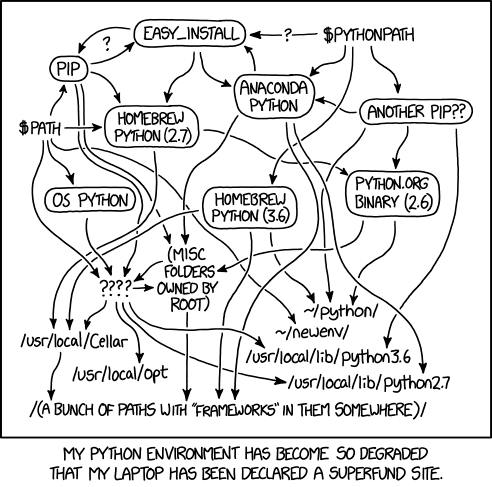
If your project uses Python, it’s highly recommended to distribute it as a package. By including a pyproject.toml file, the packaging process becomes more streamlined - trust me things can get intense.
Additionally:
{tip}
- Using `pyproject.toml` future-proofs your setup by aligning with modern packaging standards.
- The `pyproject.toml` file acts as a single source of truth for your Python dependencies and project metadata.
- You can combine Conda for system-level dependencies with `pyproject.toml` for Python dependencies, using Conda for environments and pip/poetry for Python packages.
- Any packages in the `src/` folder will be automatically discovered and installed.
Use pyproject.toml for Python Package Management
While the template recommends using Conda (or Mamba) as the environment manager and managing dependencies through an environment.yml file, there is an alternative approach that leverages pyproject.toml. This can be particularly advantageous if your project is a Python package or if you want to simplify and standardize the management of Python-specific dependencies.
Why use pyproject.toml?
The next step is ensure your code is maintainable, reliable and reproducible by including any dependencies and requirements, such as packages, configurations, secrets (template) and additional instructions.
Standardization:
pyproject.tomlis a modern, standardized format defined by PEP 518 and PEP 621 that centralizes project configuration in Python projects, including build requirements and dependencies.Python Packaging: If your project is to be distributed as a package,
pyproject.tomlis the preferred way to define build tools (like hatch or poetry) and metadata for your package (like name, version, dependencies, etc.). It allows tools likepipandbuildto install and package your project more effectively.Compatibility with Tools: The
pyproject.tomlfile is compatible with multiple Python packaging and dependency management tools such aspoetryandpip. This allows for smoother integration with CI/CD pipelines, PyPI, and other environments.Separation of Concerns: While Conda manages both system-level and Python-specific packages, using
pyproject.tomlhelps isolate Python dependencies. This is useful if your project uses primarily Python packages and you want finer control over Python versioning and dependency resolution.
Example: Using pyproject.toml
This pyproject.toml file specifies the dependencies and other metadata for your Python package. You can install these packages using pip, ensuring that your Python environment is properly managed. You can still use Conda for system-level packages (such as libc, gdal, etc.), while using pyproject.toml for Python package management.
pyproject.tomlExample:```toml [build-system] requires = ["hatchling>=1.21.0", "hatch-vcs>=0.3.0"] build-backend = "hatchling.build"
[project] name = "template" description = "A data science project" readme = { file = "README.md", content-type = "text/markdown" } license = { file = "LICENSE" } authors = [ { name = "Your Name", email = "your.email@example.com" } ] dynamic = ["version"]
python = ">=3.9" dependencies = [ "pandas>=1.4.3,<2", ] [project.optional-dependencies] docs = [ "docutils==0.17.1", "jupyter-book>=1,<2", ]
[tool.hatch.build.targets.sdist] include = [ "src/*/" ]
[tool.hatch.version] source = "vcs" ```
Keep the Conda Environment for System-level Packages: You can continue to use
environment.ymlto specify non-Python dependencies or packages not available on PyPI, such asmambaorgdal.```yaml channels:
- conda-forge dependencies:
- python=3.9
- mamba
- gdal ```
Installation: To create an environment, you would first install the Conda dependencies and then use
pipto install Python-specific dependencies frompyproject.toml. Alternatively, you can skip Conda and usepipfor the entire setup.```shell
Create Conda environment
conda env create -f environment.yml -n
Activate the environment
conda activate
Install Python dependencies
pip install . ```
To install a Python package directly from a GitHub repository using pip, you can use the command pip install git+https://github.com/<username>/<repository>.git. This allows you to install the latest version of the package from the repository. You can also specify a particular branch or release tag by adding @<branch_or_tag> at the end of the URL This is particularly useful when you want to access features or fixes that haven’t been published on PyPI yet, or to get the latest updates from the repository.
If you want to install the latest release, you should specify the tag associated with that release. For instance:
shell
    pip install git+https://github.com/<username>/<repository>.git@<latest_release_tag>
{seealso}
- [Packaging Python Projects](https://packaging.python.org/en/latest/tutorials/packaging-projects/)
- [Writing your pyproject.toml](https://packaging.python.org/en/latest/guides/writing-pyproject-toml/)
- [Conda Managing Environments](https://conda.io/projects/conda/en/latest/user-guide/tasks/manage-environments.html)
Building Documentation Locally
To build the documentation locally, please follow these steps:
- Install the package with documentation dependencies:
shell
    pip install -e .[docs]
in some environments (e.g., on Mac OS), try this instead to scape the brackets:
shell
    pip install -e .\[docs]\
- Build the documentation:
shell
   jupyter-book build . --config docs/_config.yml --toc docs/_toc.yml
The generated documentation will be available in the _build/html directory. Open the index.html file in a web browser to view it.
Code of Conduct
The template maintains a Code of Conduct to ensure an inclusive and respectful environment for everyone. Please adhere to it in all interactions within our community.
License
The template is licensed under the Mozilla Public License. Remember to replace the license if necessary. If open source, choose an open source license.
Owner
- Login: WeakNameGame
- Kind: user
- Repositories: 1
- Profile: https://github.com/WeakNameGame
Citation (CITATION.cff)
cff-version: 1.2.0
message: "Country borders or names do not necessarily reflect the World Bank Group’s official position. All maps are for illustrative purposes and do not imply the expression of any opinion on the part of the World Bank, concerning the legal status of any country or territory or concerning the delimitation of frontiers or boundaries."
title: "World Bank Data Lab Project Template"
authors:
  - affiliation: World Bank
    family-names: Stefanini Vicente
    given-names: Gabriel
    orcid: https://orcid.org/0000-0001-6530-3780
keywords:
  - Open Science
repository-code: https://github.com/worldbank/template/tree/main
GitHub Events
Total
- Push event: 14
- Pull request event: 1
- Create event: 3
Last Year
- Push event: 14
- Pull request event: 1
- Create event: 3
Dependencies
- actions/checkout v4 composite
- actions/deploy-pages v4 composite
- actions/setup-python v5 composite
- actions/upload-pages-artifact v3 composite
- actions/checkout v4 composite
- actions/download-artifact v4 composite
- actions/setup-python v5 composite
- actions/upload-artifact v4 composite
- pypa/gh-action-pypi-publish release/v1 composite
- bokeh >=3,<4
- pandas >=2
- pycountry >=22.3.5
- requests >=2.28.1