phd-thesis-public
:book: My PhD thesis at the University of Firenze
Science Score: 13.0%
This score indicates how likely this project is to be science-related based on various indicators:
-
○CITATION.cff file
-
✓codemeta.json file
Found codemeta.json file -
○.zenodo.json file
-
○DOI references
-
○Academic publication links
-
○Committers with academic emails
-
○Institutional organization owner
-
○JOSS paper metadata
-
○Scientific vocabulary similarity
Low similarity (9.9%) to scientific vocabulary
Keywords
Repository
:book: My PhD thesis at the University of Firenze
Basic Info
- Host: GitHub
- Owner: mbarbetti
- Default Branch: main
- Homepage: https://cds.cern.ch/record/2906203
- Size: 40.5 MB
Statistics
- Stars: 0
- Watchers: 1
- Forks: 0
- Open Issues: 0
- Releases: 0
Topics
Metadata Files
README.md


PhD Thesis
FLORE link : https://hdl.handle.net/2158/1375192
CDS report number : CERN-THESIS-2024-108
Info
- Title: "The flash-simulation paradigm and its implementation based on Deep Generative Models for the LHCb experiment at CERN"
- Advisor: Lucio Anderlini (INFN Firenze) lucio.anderlini@fi.infn.it
- Head of the PhD Program: Stefano Berretti (UniFi) - stefano.berretti@unifi.it
- Evaluation Committee:
- Denis Derkach (HSE) denis.derkach@cern.ch
- Michael Williams (MIT) - mwill@mit.edu
- Graduation day: July 15, 2024
- Graduation score: Ph.D. entitled cum laude
Abstract
The LHCb experiment is dedicated to precision measurements of hadrons containing $b$ and $c$ quarks at the Large Hadron Collider (LHC) at CERN. During the first two Runs of the LHC, spanning from 2010 to 2018, the LHCb Collaboration invested more than 90% of the computing budget to simulate the detector response to the traversing particles produced in heavy hadron decays. Since 2022, the LHCb experiment has relied on a renewed detector and a novel data-acquisition strategy designed to acquire data at a rate enhanced by a factor of ten. Enabling an equivalent increase in simulation production is a major challenge, requiring a technological shift and diversifying the simulation strategies for specific purposes. Data processing and data analysis technologies have been evolving quickly during the last ten years. New industrial standards and huge communities behind open-source software projects arose, transforming the landscape of computer science and data processing. The fast development of Machine Learning and Cloud technologies provides modern solutions to address challenges well known to the High Energy Physics community, operating distributed data processing software on the nodes of the Worldwide LHC Computing Grid for the last three decades. In this Thesis, I present a study to adopt these new technologies to evolve the LHCb simulation software using machine learning models trained on multi-cloud resources to parameterize the detector response and the effects induced by the reconstruction algorithms. The resulting detector simulation approach is known as flash-simulation and represents the most challenging and radical option in the landscape of opportunities to accelerate the detector simulation. To encode in a machine learning model the intrinsic randomness of the quantum interactions occurring within the detector, the experimental uncertainties, and the effect of missing variables, parameterizations are designed as Generative Models, and in particular as Generative Adversarial Networks. The Lamarr project, arising as the official flash-simulation option of the LHCb experiment, enables connecting the trained models in long data-processing pipelines to simulate various effects in the detection and reconstruction procedure. Pipelines can be deployed in the LHCb Simulation software stack by relying on the same physics generators as the other simulation approaches and serializing the results with the format of the official reconstruction software. In this Thesis, I address the most compelling challenges in the design of a flash-simulation solution, including the identification of a strategy to train and validate reliable parameterizations, the definition and distribution of heavy hyperparameter optimization campaigns through opportunistic computing resources, the combination of multiple parameterizations in a data processing pipeline, and its deployment in the software stack of one of the major experiments at the LHC. Future work will extend the validation of flash-simulation techniques for additional heavy hadrons, decay modes, and data-taking conditions, paving the way to the widespread adoption of flash-simulations and contributing to a significant decrease in the average computational cost of detector simulation.
Cite me
Are you referring to my research project? Please cite me!
M. Barbetti, The flash-simulation paradigm and its implementation based on Deep Generative Models for the LHCb experiment at CERN, PhD thesis, University of Firenze, 2024
bibtex
@phdthesis{Barbetti:15072024,
    author = "Barbetti, Matteo",
    title  = "{The flash-simulation paradigm and its implementation
               based on Deep Generative Models for the LHCb experiment
               at CERN}",
    school = "University of Firenze",
    year   = "2024",
    url    = "https://cds.cern.ch/record/2906203",
}
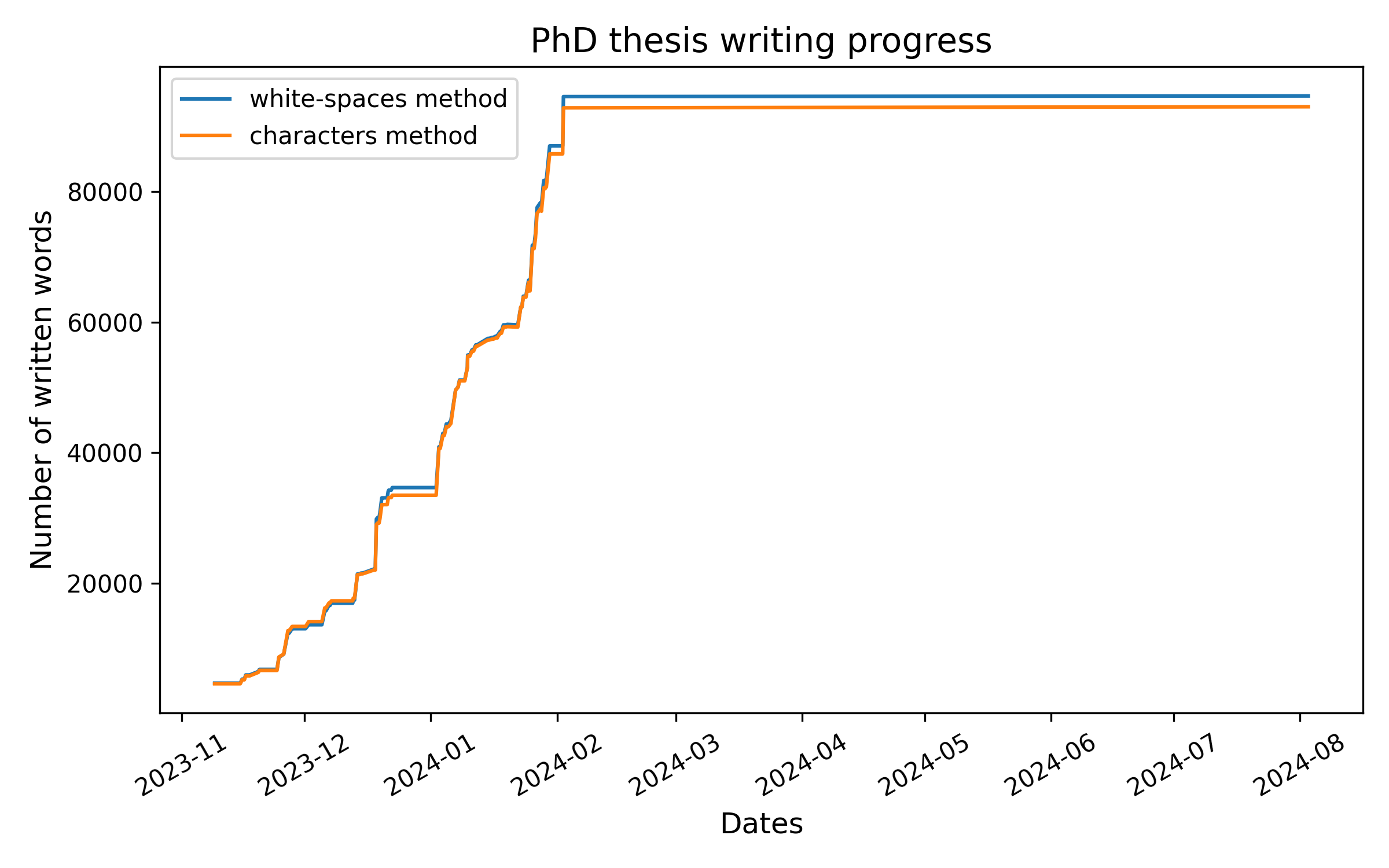
Progress report
Owner
- Name: Matteo Barbetti
- Login: mbarbetti
- Kind: user
- Location: Firenze, Italy
- Company: University of Florence
- Website: mbarbetti.github.io
- Twitter: mbarbetz
- Repositories: 11
- Profile: https://github.com/mbarbetti
PhD student in Smart Computing @ UniFi
GitHub Events
Total
Last Year
Committers
Last synced: about 1 year ago
Top Committers
| Name | Commits | |
|---|---|---|
| mbarbetti | m****4@g****m | 146 |
Issues and Pull Requests
Last synced: about 1 year ago
All Time
- Total issues: 0
- Total pull requests: 0
- Average time to close issues: N/A
- Average time to close pull requests: N/A
- Total issue authors: 0
- Total pull request authors: 0
- Average comments per issue: 0
- Average comments per pull request: 0
- Merged pull requests: 0
- Bot issues: 0
- Bot pull requests: 0
Past Year
- Issues: 0
- Pull requests: 0
- Average time to close issues: N/A
- Average time to close pull requests: N/A
- Issue authors: 0
- Pull request authors: 0
- Average comments per issue: 0
- Average comments per pull request: 0
- Merged pull requests: 0
- Bot issues: 0
- Bot pull requests: 0