FLOWUnsteady
An interactional aerodynamics and acoustics solver for multirotor aircraft and wind energy
Science Score: 67.0%
This score indicates how likely this project is to be science-related based on various indicators:
-
○CITATION.cff file
-
✓codemeta.json file
Found codemeta.json file -
✓.zenodo.json file
Found .zenodo.json file -
✓DOI references
Found 6 DOI reference(s) in README -
✓Academic publication links
Links to: joss.theoj.org -
✓Committers with academic emails
1 of 10 committers (10.0%) from academic institutions -
✓Institutional organization owner
Organization byuflowlab has institutional domain (flow.byu.edu) -
○JOSS paper metadata
-
○Scientific vocabulary similarity
Low similarity (10.8%) to scientific vocabulary
Keywords
Keywords from Contributors
Repository
An interactional aerodynamics and acoustics solver for multirotor aircraft and wind energy
Basic Info
- Host: GitHub
- Owner: byuflowlab
- License: mit
- Language: Julia
- Default Branch: master
- Homepage: https://flow.byu.edu/FLOWUnsteady/
- Size: 157 MB
Statistics
- Stars: 322
- Watchers: 25
- Forks: 81
- Open Issues: 40
- Releases: 11
Topics
Metadata Files
README.md

Interactional aerodynamics solver for multirotor aircraft and wind energy


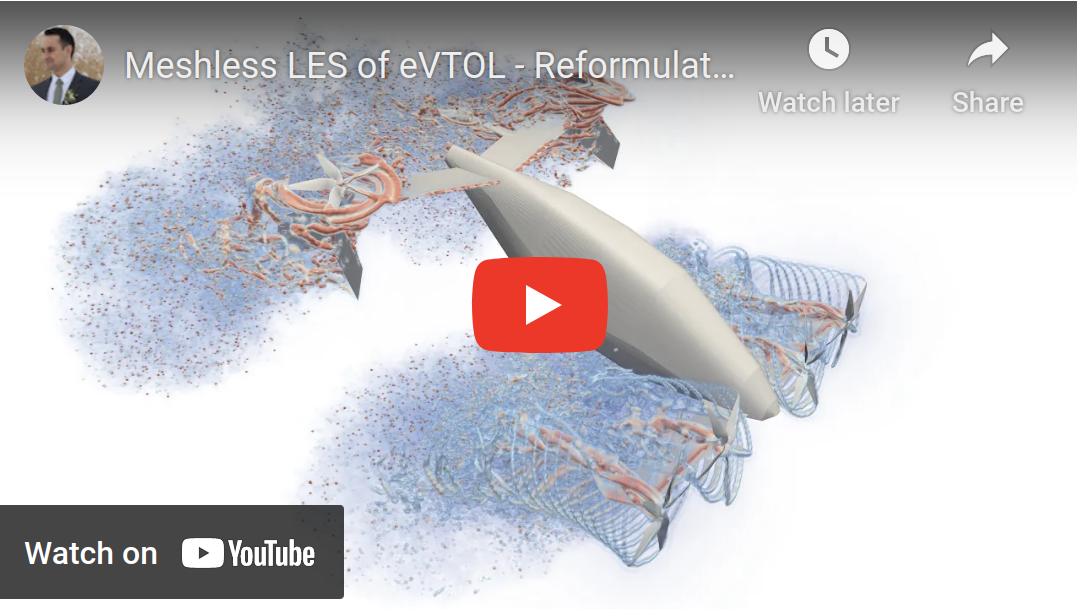
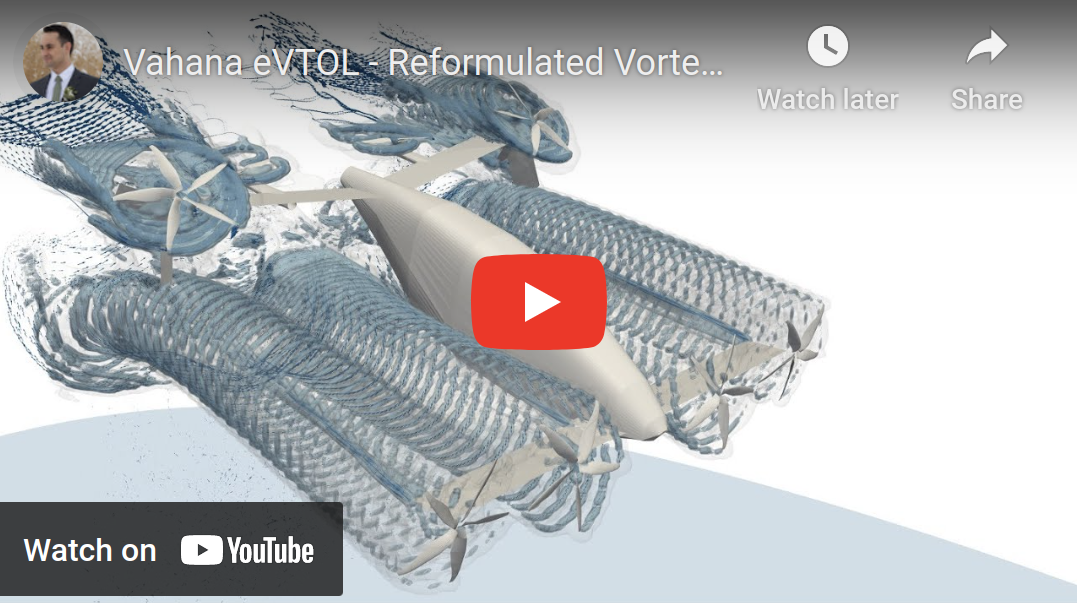
FLOWUnsteady is an open-source variable-fidelity framework for unsteady aerodynamics and aeroacoustics based on the reformulated vortex particle method (rVPM). This suite brings together various tools developed by the FLOW Lab at Brigham Young University: Vortex lattice method, strip theory, blade elements, 3D panel method, and rVPM. The suite also integrates an FW-H solver and a BPM code for tonal and broadband prediction of aeroacoustic noise. In the low end of fidelity, simulations are similar to a free-wake method, while in the high end simulations become meshless large eddy simulations.
- Documentation: flow.byu.edu/FLOWUnsteady
- Code: github.com/byuflowlab/FLOWUnsteady
What is the Reformulated VPM?
The reformulated VPM is a meshless CFD method solving the LES-filtered incompressible Navier-Stokes equations in their vorticity form,

The rVPM uses particles to discretize the Navier-Stokes equations, with the particles representing radial basis functions that construct a continuous vorticity/velocity field. The basis functions become the LES filter, providing a variable filter width and spatial adaptation as the particles are convected and stretched by the velocity field. The local evolution of the filter width provides an extra degree of freedom to reinforce conservation laws, which makes the reformulated VPM numerically stable (overcoming the numerical issues that plague the classic VPM).
This meshless LES has several advantages over conventional mesh-based CFD.
In the absence of a mesh,
1. the rVPM does not suffer from the numerical dissipation introduced by a mesh
2. integrates over coarser discretizations without losing physical accuracy
3. derivatives are calculated analytically rather than approximated through a stencil.
Furthermore, rVPM is highly efficient since it uses computational elements only where there is vorticity (rather than meshing the entire space), usually being ~100x faster than conventional mesh-based LES with comparable accuracy.
While rVPM is well suited for resolving unbounded flows (wakes), complications arise when attempting to impose boundary conditions (solid boundaries) on the flow. This is because (1) the method is meshless, and (2) boundary conditions must be imposed on the Navier-Stokes equations in the form of vorticity. FLOWUnsteady is a framework designed to introduce solid boundaries into the rVPM using actuator models. Wings and rotors are introduced in the computational domain through actuator line and surface models that use low-fidelity aerodynamic methods (e.g., VLM, lifting line, panels, etc) to compute forces and embed the associated vorticity back into the LES domain.
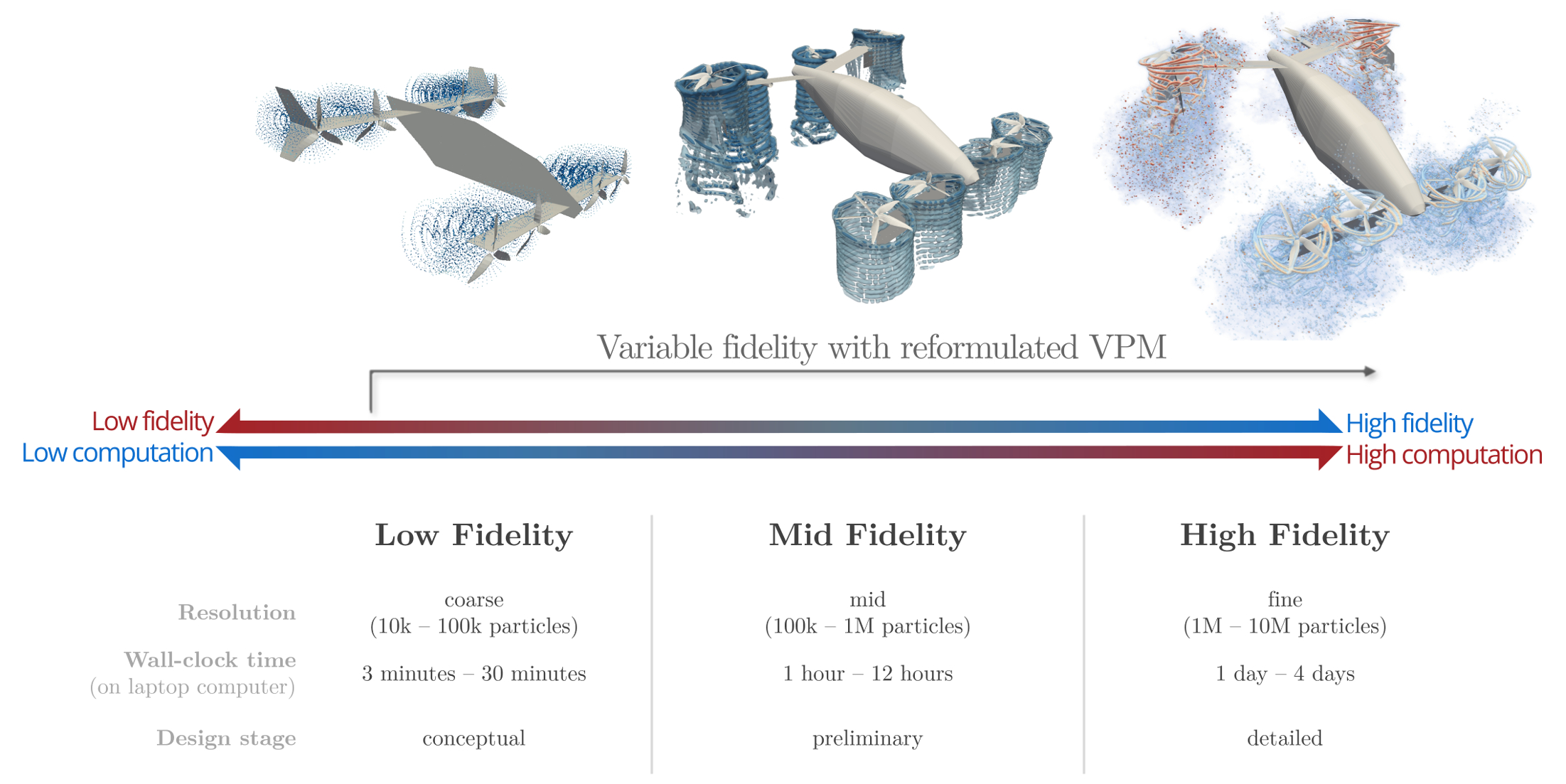
Variable Fidelity
rVPM considerably reduces engineering time by avoiding the hurdles of mesh generation. Furthermore, since it is not limited by the time-step and stability constraints of conventional mesh-based CFD, rVPM can be used across all levels of fidelity, all in the same framework by simply coarsening or refining the simulation. In the low end of fidelity, simulations are similar to a free-wake method, while in the high end simulations become meshless large eddy simulations. Thus, FLOWUnsteady can be used as a high-fidelity tool that is orders of magnitude faster than mesh-based CFD, or as a variable-fidelity tool for the different stages of design.
Capabilities
Simulation: Tilting wings and rotors • Rotors with variable RPM and variable pitch • Asymmetric and stacked rotors • Maneuvering vehicle with prescribed kinematics
rVPM Solver: Fast-multipole acceleration through ExaFMM • CPU parallelization through OpenMP • Second-order spatial accuracy and third-order RK time integration • Numerically stable by reshaping particles subject to vortex stretching • Subfilter-scale (SFS) model of turbulence associated to vortex stretching • SFS model coefficient computed dynamically or prescribed • Viscous diffusion through core spreading
Wing Models: Actuator line model through lifting line + VLM • Actuator surface model through vortex sheet + VLM • Parasitic drag through airfoil lookup tables
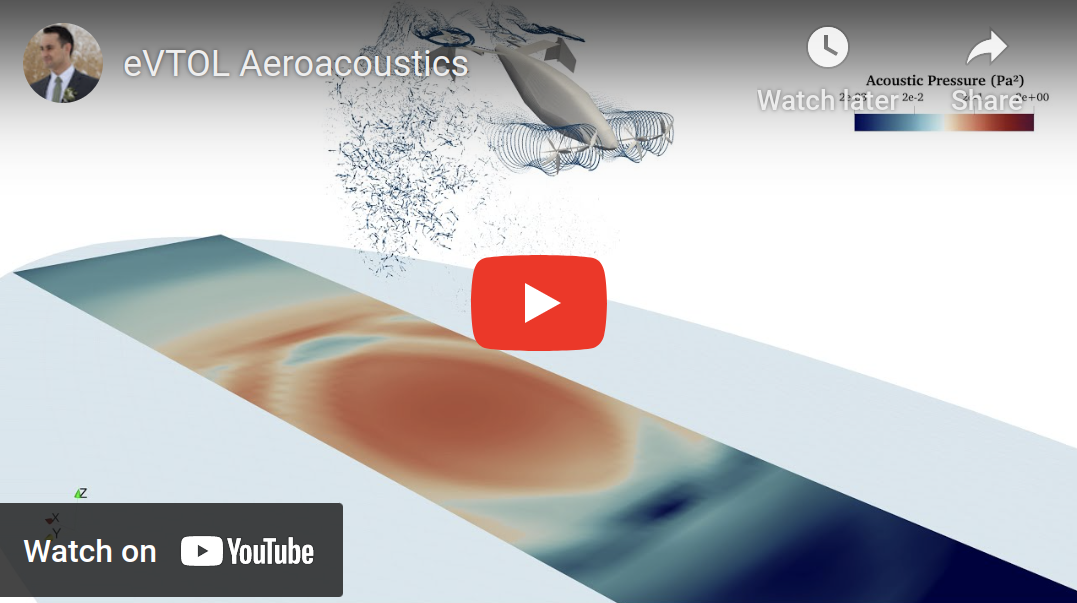
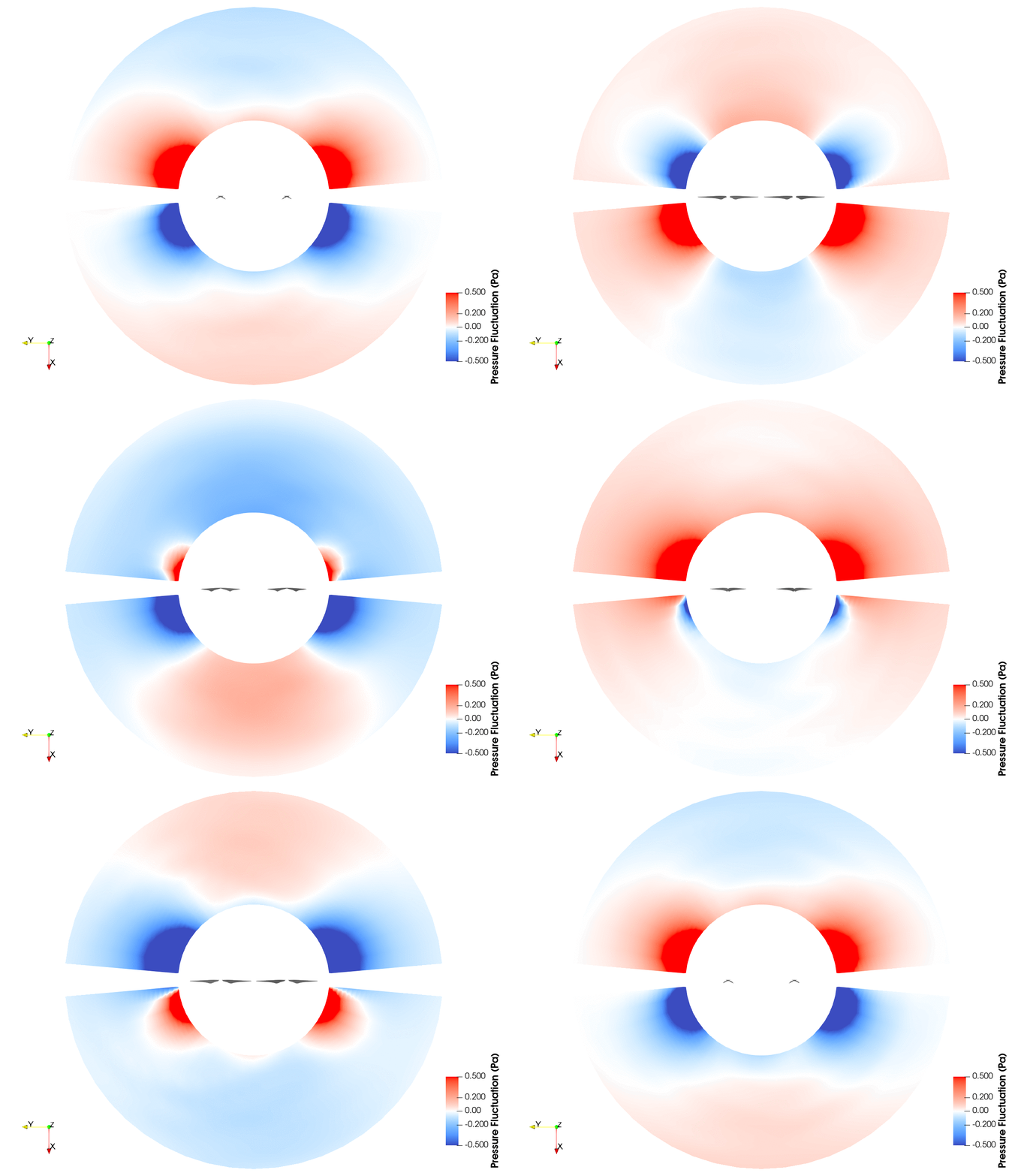
Rotor Model: Actuator line model through blade elements • Airfoil lookup tables automatically generated through XFOIL • Aeroacoustic noise through FW-H (PSU-WOPWOP) and BPM
Geometry: Simple lofts and bodies of revolution through FLOWUnsteady • Import complex geometry from OpenVSP
Under development (🤞coming soon): Advanced actuator surface models through 3D panel method (for ducts, wings, and fuselage) • Unstructured surface grids • Bluff bodies through vortex sheet method
Limitations: Viscous drag and separation is only captured through airfoil lookup tables, without attempting to shed separation wakes • Incompressible flow only (though wave drag can be captured through airfoil lookup tables) • CPU parallelization through OpenMP without support for distributed memory (no MPI, i.e., only single-node runs)
Coded in the Julia language for Linux, MacOS, and Windows WSL.
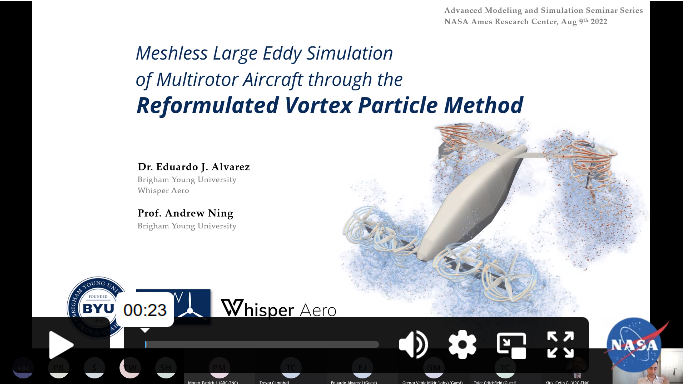
More about the models inside FLOWUnsteady:
Selected Publications
See the following publications for an in-depth dive into the theory and validation:
- E. J. Alvarez, J. Mehr, & A. Ning (2022), "FLOWUnsteady: An Interactional Aerodynamics Solver for Multirotor Aircraft and Wind Energy," AIAA AVIATION Forum. [VIDEO] [PDF]
- E. J. Alvarez (2022), "Reformulated Vortex Particle Method and Meshless Large Eddy Simulation of Multirotor Aircraft.," Doctoral Dissertation, Brigham Young University. [VIDEO] [PDF]
- E. J. Alvarez & A. Ning (2023), "Stable Vortex Particle Method Formulation for Meshless Large-Eddy Simulation," AIAA Journal. [PDF]
Examples and Tutorials
Propeller: [Tutorial] [Validation]
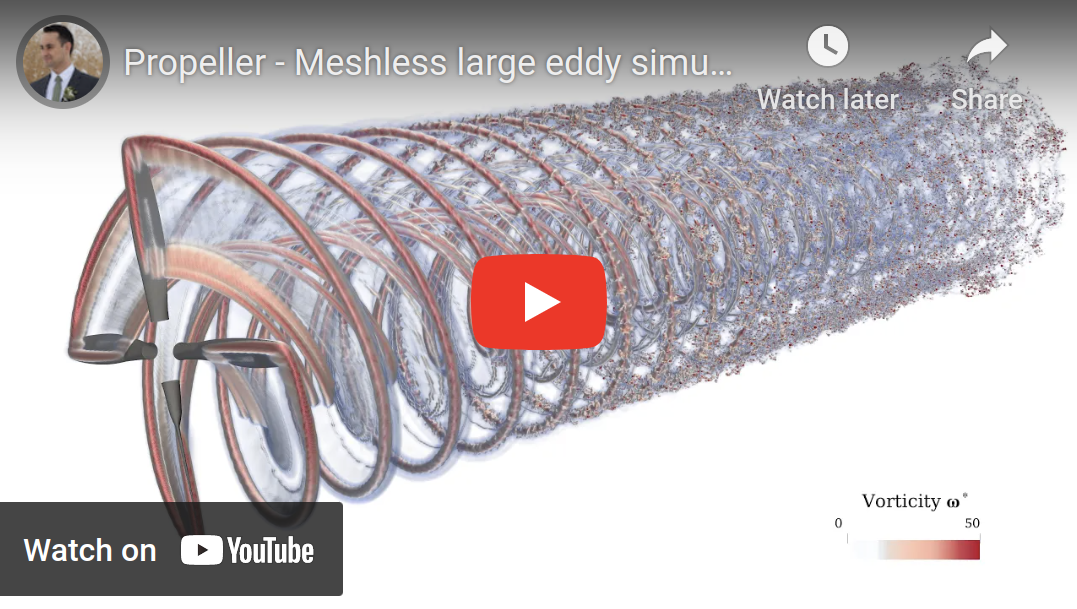
Rotor in Hover: [Tutorial] [Validation]
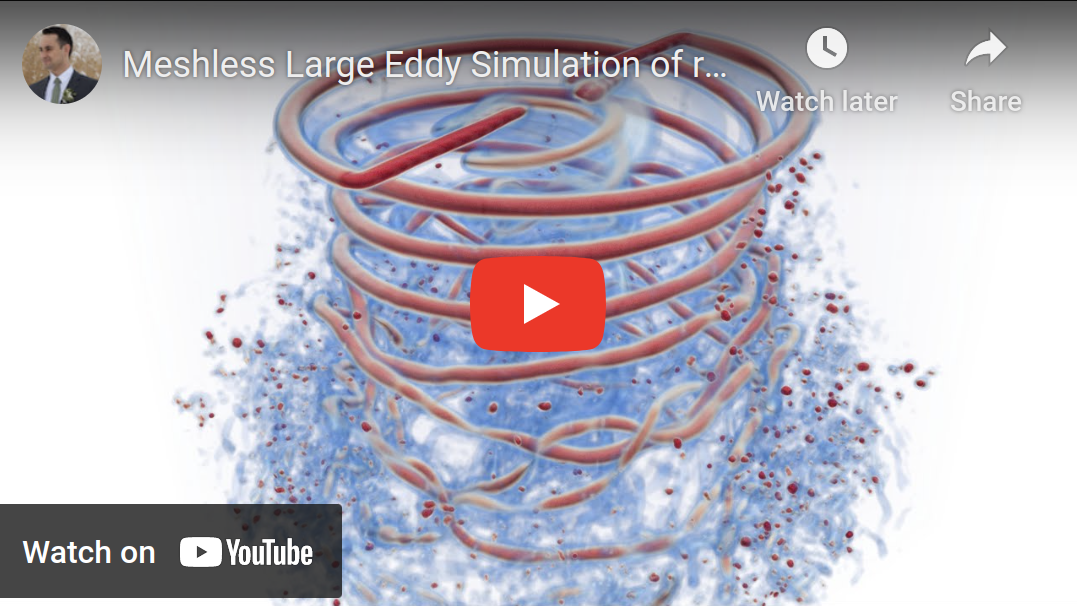
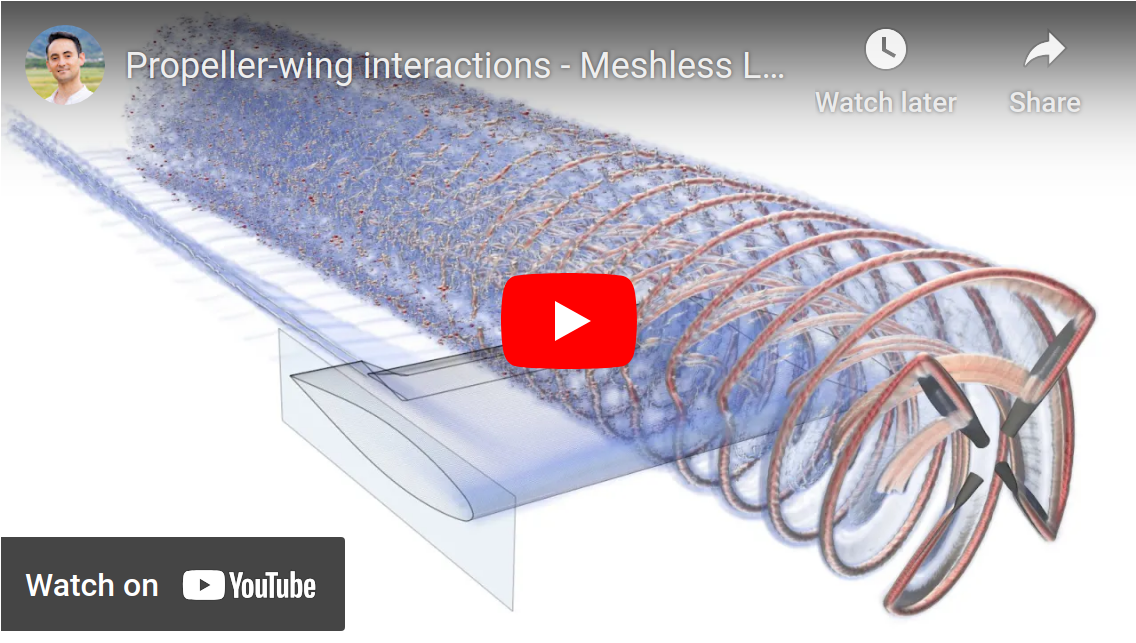
Blown Wing: [Tutorial] [Validation]
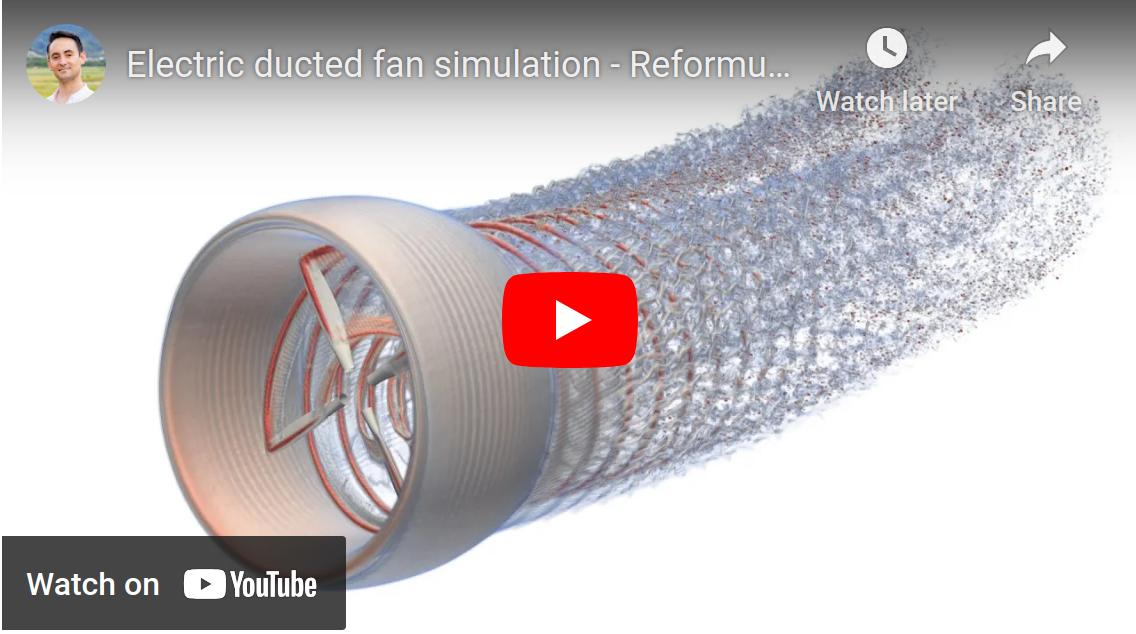
Ducted Fan: [Slides]
Airborne-Wind-Energy Aircraft: [Video]
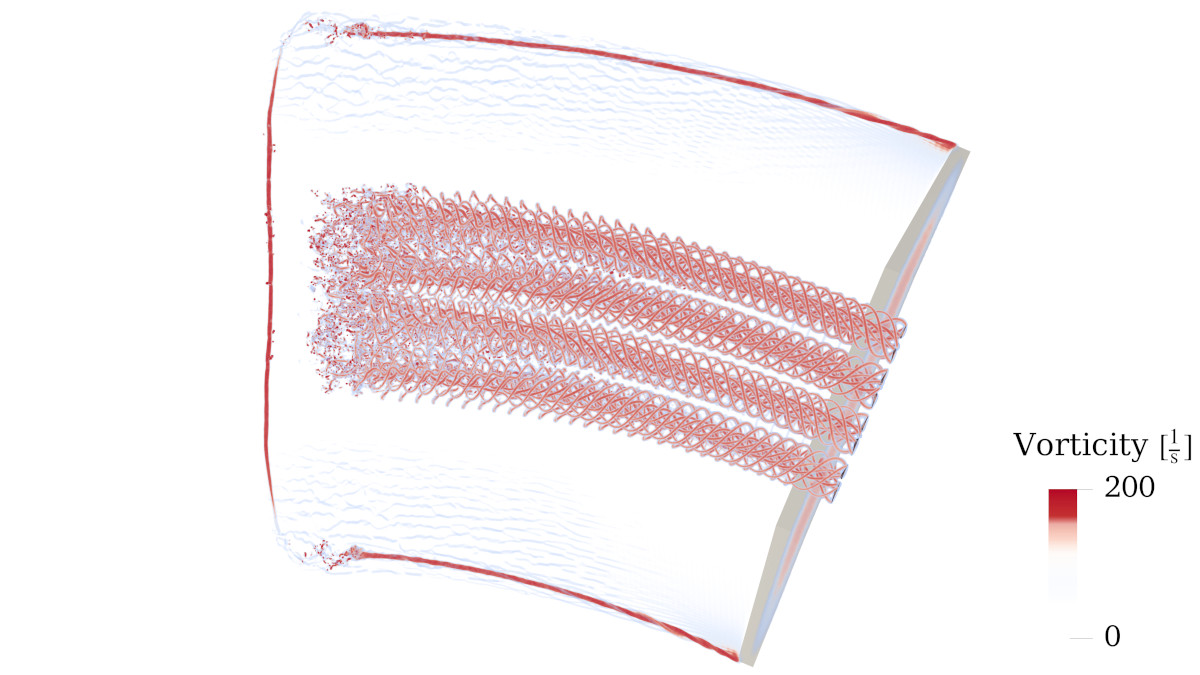
eVTOL Transition: [Tutorial]
Mid-fidelity
High-fidelity
Aeroacoustic Noise: [Tutorial] [Validation]
Sponsors

About
FLOWUnsteady is an open-source project jointly led by the FLOW Lab at Brigham Young University and Whisper Aero. All contributions are welcome.
If you find FLOWUnsteady useful in your work, we kindly request that you cite the following paper [URL] [PDF]:
Alvarez, E. J., Mehr, J., and Ning, A., “FLOWUnsteady: An Interactional Aerodynamics Solver for Multirotor Aircraft and Wind Energy,” AIAA AVIATION 2022 Forum, Chicago, IL, 2022. DOI:10.2514/6.2022-3218.
If you were to encounter any issues or have questions, please first read through the documentation, open/closed issues, and the discussion forum. If the issue still persists, please participate in the discussion forum and/or open a new issue.
- Developers/contributors : Eduardo J. Alvarez (main), Cibin Joseph, Judd Mehr, Ryan Anderson, Eric Green
- Created : Sep 2017
- License : MIT License
Owner
- Name: BYU FLOW Lab
- Login: byuflowlab
- Kind: organization
- Location: Provo, UT
- Website: http://flow.byu.edu
- Repositories: 94
- Profile: https://github.com/byuflowlab
FLight, Optimization, and Wind
GitHub Events
Total
- Create event: 6
- Release event: 1
- Issues event: 17
- Watch event: 48
- Delete event: 2
- Member event: 1
- Issue comment event: 27
- Push event: 34
- Pull request event: 11
- Fork event: 8
Last Year
- Create event: 6
- Release event: 1
- Issues event: 17
- Watch event: 48
- Delete event: 2
- Member event: 1
- Issue comment event: 27
- Push event: 34
- Pull request event: 11
- Fork event: 8
Committers
Last synced: 11 months ago
Top Committers
| Name | Commits | |
|---|---|---|
| EdoAlvarezR | E****R@g****m | 511 |
| Judd Mehr | j****r@g****m | 204 |
| Ryan Anderson | r****n@g****m | 32 |
| cardoza2 | a****m@c****e | 24 |
| cibinjoseph | c****2@g****m | 22 |
| BTV25 | 7****5 | 16 |
| Andrew Tagg | a****7@g****m | 3 |
| Eric-P-Green | 8****n | 2 |
| dcaprace | d****e@b****u | 1 |
| Kevin Moore | m****1@g****m | 1 |
Committer Domains (Top 20 + Academic)
Issues and Pull Requests
Last synced: 11 months ago
All Time
- Total issues: 112
- Total pull requests: 40
- Average time to close issues: about 2 months
- Average time to close pull requests: 20 days
- Total issue authors: 49
- Total pull request authors: 9
- Average comments per issue: 2.09
- Average comments per pull request: 0.15
- Merged pull requests: 28
- Bot issues: 0
- Bot pull requests: 7
Past Year
- Issues: 16
- Pull requests: 8
- Average time to close issues: about 1 month
- Average time to close pull requests: 18 minutes
- Issue authors: 13
- Pull request authors: 3
- Average comments per issue: 1.81
- Average comments per pull request: 0.13
- Merged pull requests: 2
- Bot issues: 0
- Bot pull requests: 2
Top Authors
Issue Authors
- juddmehr (15)
- inse0918 (9)
- NM1293 (9)
- AndreaRapi (7)
- philippmandl (5)
- tylercritchfield (4)
- Ajaykrishna0703 (4)
- Liuhaosheng1 (4)
- christianhauschel (4)
- cibinjoseph (3)
- EdoAlvarezR (3)
- MarcoPic99 (3)
- sakurakikiki (3)
- wjsjtu123 (2)
- Cardoza2 (2)
Pull Request Authors
- EdoAlvarezR (14)
- cibinjoseph (8)
- github-actions[bot] (7)
- timothyharlow-hub (5)
- Eric-P-Green (2)
- BTV25 (1)
- juddmehr (1)
- catchhead (1)
- DGCaprace (1)
Top Labels
Issue Labels
Pull Request Labels
Packages
- Total packages: 2
- Total downloads: unknown
-
Total dependent packages: 0
(may contain duplicates) -
Total dependent repositories: 0
(may contain duplicates) - Total versions: 20
proxy.golang.org: github.com/byuflowlab/FLOWUnsteady
- Documentation: https://pkg.go.dev/github.com/byuflowlab/FLOWUnsteady#section-documentation
- License: mit
-
Latest release: v3.4.0+incompatible
published 12 months ago
Rankings
proxy.golang.org: github.com/byuflowlab/flowunsteady
- Documentation: https://pkg.go.dev/github.com/byuflowlab/flowunsteady#section-documentation
- License: mit
-
Latest release: v3.4.0+incompatible
published 12 months ago
Rankings
Dependencies
- JuliaRegistries/TagBot v1 composite
- actions/checkout v2 composite
- julia-actions/setup-julia latest composite