https://github.com/adbar/courlan
Clean, filter and sample URLs to optimize data collection – Python & command-line – Deduplication, spam, content and language filters
Science Score: 13.0%
This score indicates how likely this project is to be science-related based on various indicators:
-
○CITATION.cff file
-
✓codemeta.json file
Found codemeta.json file -
○.zenodo.json file
-
○DOI references
-
○Academic publication links
-
○Committers with academic emails
-
○Institutional organization owner
-
○JOSS paper metadata
-
○Scientific vocabulary similarity
Low similarity (15.9%) to scientific vocabulary
Keywords
Keywords from Contributors
Repository
Clean, filter and sample URLs to optimize data collection – Python & command-line – Deduplication, spam, content and language filters
Basic Info
- Host: GitHub
- Owner: adbar
- License: apache-2.0
- Language: Python
- Default Branch: master
- Homepage: https://adrien.barbaresi.eu/blog/easy-content-aware-url-filtering.html
- Size: 547 KB
Statistics
- Stars: 145
- Watchers: 1
- Forks: 9
- Open Issues: 10
- Releases: 28
Topics
Metadata Files
README.md
coURLan: Clean, filter, normalize, and sample URLs




Why coURLan?
"It is important for the crawler to visit 'important' pages first, so that the fraction of the Web that is visited (and kept up to date) is more meaningful." (Cho et al. 1998)
"Given that the bandwidth for conducting crawls is neither infinite nor free, it is becoming essential to crawl the Web in not only a scalable, but efficient way, if some reasonable measure of quality or freshness is to be maintained." (Edwards et al. 2001)
This library provides an additional "brain" for web crawling, scraping and document management. It facilitates web navigation through a set of filters, enhancing the quality of resulting document collections:
- Save bandwidth and processing time by steering clear of pages deemed low-value
- Identify specific pages based on language or text content
- Pinpoint pages relevant for efficient link gathering
Additional utilities needed include URL storage, filtering, and deduplication.
Features
Separate the wheat from the chaff and optimize document discovery and retrieval:
- URL handling
- Validation
- Normalization
- Sampling
- Heuristics for link filtering
- Spam, trackers, and content-types
- Locales and internationalization
- Web crawling (frontier, scheduling)
- Data store specifically designed for URLs
- Usable with Python or on the command-line
Let the coURLan fish up juicy bits for you!
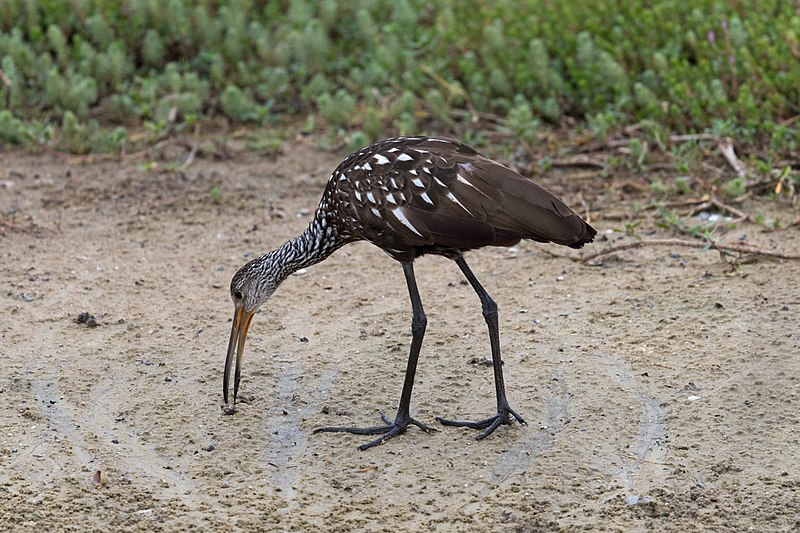
Here is a courlan (source: Limpkin at Harn's Marsh by Russ, CC BY 2.0).
.jpg)
Installation
This package is compatible with with all common versions of Python, it is tested on Linux, macOS and Windows systems.
Courlan is available on the package repository PyPI
and can notably be installed with the Python package manager pip:
bash
$ pip install courlan # pip3 install on systems where both Python 2 and 3 are installed
$ pip install --upgrade courlan # to make sure you have the latest version
$ pip install git+https://github.com/adbar/courlan.git # latest available code (see build status above)
The last version to support Python 3.6 and 3.7 is courlan==1.2.0.
Python
Most filters revolve around the strict and language arguments.
check_url()
All useful operations chained in check_url(url):
``` python
from courlan import check_url
return url and domain name
check_url('https://github.com/adbar/courlan') ('https://github.com/adbar/courlan', 'github.com')
filter out bogus domains
check_url('http://666.0.0.1/')
tracker removal
checkurl('http://test.net/foo.html?utmsource=twitter#gclid=123') ('http://test.net/foo.html', 'test.net')
use strict for further trimming
myurl = 'https://httpbin.org/redirect-to?url=http%3A%2F%2Fexample.org' checkurl(my_url, strict=True) ('https://httpbin.org/redirect-to', 'httpbin.org')
check for redirects (HEAD request)
url, domainname = checkurl(myurl, withredirects=True)
include navigation pages instead of discarding them
checkurl('http://www.example.org/page/10/', withnav=True)
remove trailing slash
checkurl('https://github.com/adbar/courlan/', trailingslash=False) ```
Language-aware heuristics, notably internationalization in URLs, are
available in lang_filter(url, language):
``` python
optional language argument
url = 'https://www.un.org/en/about-us'
success: returns clean URL and domain name
check_url(url, language='en') ('https://www.un.org/en/about-us', 'un.org')
failure: doesn't return anything
check_url(url, language='de')
optional argument: strict
url = 'https://en.wikipedia.org/' checkurl(url, language='de', strict=False) ('https://en.wikipedia.org', 'wikipedia.org') checkurl(url, language='de', strict=True)
```
Define stricter restrictions on the expected content type with
strict=True. This also blocks certain platforms and page types
where machines get lost.
``` python
strict filtering: blocked as it is a major platform
check_url('https://www.twitch.com/', strict=True)
```
Sampling by domain name
``` python
from courlan import sampleurls myurls = ['https://example.org/' + str(x) for x in range(100)] mysample = sampleurls(my_urls, 10)
optional: excludemin=None, excludemax=None, strict=False, verbose=False
```
Web crawling and URL handling
Link extraction and preprocessing:
``` python
from courlan import extractlinks doc = 'Link' url = "https://example.org" extractlinks(doc, url) {'https://example.org/test/link.html'}
other options: externalbool, nofilter, language, strict, redirects, ...
```
The filter_links() function provides additional filters for crawling purposes:
use of robots.txt rules and link priorization. See courlan.core for details.
Determine if a link leads to another host:
``` python
from courlan import isexternal isexternal('https://github.com/', 'https://www.microsoft.com/') True
default
isexternal('https://google.com/', 'https://www.google.co.uk/', ignoresuffix=True) False
taking suffixes into account
isexternal('https://google.com/', 'https://www.google.co.uk/', ignoresuffix=False) True ```
Other useful functions dedicated to URL handling:
-
extract_domain(url, fast=True): find domain and subdomain or just domain withfast=False -
get_base_url(url): strip the URL of some of its parts -
get_host_and_path(url): decompose URLs in two parts: protocol + host/domain and path -
get_hostinfo(url): extract domain and host info (protocol + host/domain) -
fix_relative_urls(baseurl, url): prepend necessary information to relative links
``` python
from courlan import * url = 'https://www.un.org/en/about-us'
getbaseurl(url) 'https://www.un.org'
gethostand_path(url) ('https://www.un.org', '/en/about-us')
get_hostinfo(url) ('un.org', 'https://www.un.org')
fixrelativeurls('https://www.un.org', 'en/about-us') 'https://www.un.org/en/about-us' ```
Other filters dedicated to crawl frontier management:
-
is_not_crawlable(url): check for deep web or pages generally not usable in a crawling context -
is_navigation_page(url): check for navigation and overview pages
``` python
from courlan import isnavigationpage, isnotcrawlable isnavigationpage('https://www.randomblog.net/category/myposts') True isnotcrawlable('https://www.randomblog.net/login') True ```
See also URL management page of the Trafilatura documentation.
Python helpers
Helper function, scrub and normalize:
``` python
from courlan import cleanurl cleanurl('HTTPS://WWW.DWDS.DE:80/') 'https://www.dwds.de' ```
Basic scrubbing only:
``` python
from courlan import scrub_url ```
Basic canonicalization/normalization only, i.e. modifying and standardizing URLs in a consistent manner:
``` python
from urllib.parse import urlparse from courlan import normalizeurl myurl = normalizeurl(urlparse(myurl))
passing URL strings directly also works
myurl = normalizeurl(my_url)
remove unnecessary components and re-order query elements
normalizeurl('http://test.net/foo.html?utmsource=twitter&post=abc&page=2#fragment', strict=True) 'http://test.net/foo.html?page=2&post=abc' ```
Basic URL validation only:
``` python
from courlan import validateurl validateurl('http://1234') (False, None) validate_url('http://www.example.org/') (True, ParseResult(scheme='http', netloc='www.example.org', path='/', params='', query='', fragment='')) ```
Troubleshooting
Courlan uses an internal cache to speed up URL parsing. It can be reset as follows:
``` python
from courlan.meta import clearcaches clearcaches() ```
UrlStore class
The UrlStore class allow for storing and retrieving domain-classified
URLs, where a URL like https://example.org/path/testpage is stored as
the path /path/testpage within the domain https://example.org. It
features the following methods:
URL management
add_urls(urls=[], appendleft=None, visited=False): Add a list of URLs to the (possibly) existing one. Optional: append certain URLs to the left, specify if the URLs have already been visited.add_from_html(htmlstring, url, external=False, lang=None, with_nav=True): Extract and filter links in a HTML string.discard(domains): Declare domains void and prune the store.dump_urls(): Return a list of all known URLs.print_urls(): Print all URLs in store (URL + TAB + visited or not).print_unvisited_urls(): Print all unvisited URLs in store.get_all_counts(): Return all download counts for the hosts in store.get_known_domains(): Return all known domains as a list.get_unvisited_domains(): Find all domains for which there are unvisited URLs.total_url_number(): Find number of all URLs in store.is_known(url): Check if the given URL has already been stored.has_been_visited(url): Check if the given URL has already been visited.filter_unknown_urls(urls): Take a list of URLs and return the currently unknown ones.filter_unvisited_urls(urls): Take a list of URLs and return the currently unvisited ones.find_known_urls(domain): Get all already known URLs for the given domain (ex.https://example.org).find_unvisited_urls(domain): Get all unvisited URLs for the given domain.get_unvisited_domains(): Return all domains which have not been all visited.reset(): Re-initialize the URL store.
Crawling and downloads
get_url(domain): Retrieve a single URL and consider it to be visited (with corresponding timestamp).get_rules(domain): Return the stored crawling rules for the given website.store_rules(website, rules=None): Store crawling rules for a given website.get_crawl_delay(): Return the delay as extracted from robots.txt, or a given default.get_download_urls(max_urls=100, time_limit=10): Get a list of immediately downloadable URLs according to the given time limit per domain.establish_download_schedule(max_urls=100, time_limit=10): Get up to the specified number of URLs along with a suitable backoff schedule (in seconds).download_threshold_reached(threshold): Find out if the download limit (in seconds) has been reached for one of the websites in store.unvisited_websites_number(): Return the number of websites for which there are still URLs to visit.is_exhausted_domain(domain): Tell if all known URLs for the website have been visited.
Persistance
write(filename): Save the store to disk.load_store(filename): Read a UrlStore from disk (separate function, not class method).
Optional settings:
compressed=True: activate compression of URLs and ruleslanguage=XX: focus on a particular target language (two-letter code)strict=True: stricter URL filteringverbose=True: dump URLs if interrupted (requires use ofsignal)
Command-line
The main fonctions are also available through a command-line utility:
``` bash $ courlan --inputfile url-list.txt --outputfile cleaned-urls.txt $ courlan --help usage: courlan [-h] -i INPUTFILE -o OUTPUTFILE [-d DISCARDEDFILE] [-v] [-p PARALLEL] [--strict] [-l LANGUAGE] [-r] [--sample SAMPLE] [--exclude-max EXCLUDEMAX] [--exclude-min EXCLUDEMIN]
Command-line interface for Courlan
options: -h, --help show this help message and exit
I/O: Manage input and output
-i INPUTFILE, --inputfile INPUTFILE name of input file (required) -o OUTPUTFILE, --outputfile OUTPUTFILE name of output file (required) -d DISCARDEDFILE, --discardedfile DISCARDEDFILE name of file to store discarded URLs (optional) -v, --verbose increase output verbosity -p PARALLEL, --parallel PARALLEL number of parallel processes (not used for sampling)
Filtering: Configure URL filters
--strict perform more restrictive tests -l LANGUAGE, --language LANGUAGE use language filter (ISO 639-1 code) -r, --redirects check redirects
Sampling: Use sampling by host, configure sample size
--sample SAMPLE size of sample per domain --exclude-max EXCLUDEMAX exclude domains with more than n URLs --exclude-min EXCLUDEMIN exclude domains with less than n URLs ```
License
coURLan is distributed under the Apache 2.0 license.
Versions prior to v1 were under GPLv3+ license.
Settings
courlan is optimized for English and German but its generic approach
is also usable in other contexts.
Details of strict URL filtering can be reviewed and changed in the file
settings.py. To override the default settings, clone the repository and
re-install the package
locally.
Author
Initially launched to create text databases for research purposes at the Berlin-Brandenburg Academy of Sciences (DWDS and ZDL units), this package continues to be maintained but its future development depends on community support.
If you value this software or depend on it for your product, consider sponsoring it and contributing to its codebase. Your support on GitHub or ko-fi.com will help maintain and enhance this package. Visit the Contributing page for more information.
Reach out via the software repository or the contact page for inquiries, collaborations, or feedback.
For more on Courlan's' software ecosystem see this graphic.

Similar work
These Python libraries perform similar handling and normalization tasks but do not entail language or content filters. They also do not primarily focus on crawl optimization:
References
- Cho, J., Garcia-Molina, H., & Page, L. (1998). Efficient crawling through URL ordering. Computer networks and ISDN systems, 30(1-7), 161–172.
- Edwards, J., McCurley, K. S., and Tomlin, J. A. (2001). "An adaptive model for optimizing performance of an incremental web crawler". In Proceedings of the 10th international conference on World Wide Web - WWW'01, pp. 106–113.
Owner
- Name: Adrien Barbaresi
- Login: adbar
- Kind: user
- Location: Berlin
- Company: Berlin-Brg. Academy of Sciences (BBAW)
- Website: adrien.barbaresi.eu
- Twitter: adbarbaresi
- Repositories: 37
- Profile: https://github.com/adbar
Research scientist – natural language processing, web scraping and text analytics. Mostly with Python.
GitHub Events
Total
- Create event: 7
- Release event: 1
- Issues event: 2
- Watch event: 25
- Delete event: 5
- Issue comment event: 5
- Push event: 8
- Pull request event: 11
Last Year
- Create event: 7
- Release event: 1
- Issues event: 2
- Watch event: 25
- Delete event: 5
- Issue comment event: 5
- Push event: 8
- Pull request event: 11
Committers
Last synced: over 2 years ago
Top Committers
| Name | Commits | |
|---|---|---|
| Adrien Barbaresi | b****i@b****e | 278 |
| sourcery-ai[bot] | 5****] | 2 |
| feltcat | 5****t | 1 |
Committer Domains (Top 20 + Academic)
Issues and Pull Requests
Last synced: 11 months ago
All Time
- Total issues: 32
- Total pull requests: 93
- Average time to close issues: 25 days
- Average time to close pull requests: 8 days
- Total issue authors: 5
- Total pull request authors: 5
- Average comments per issue: 0.72
- Average comments per pull request: 0.99
- Merged pull requests: 79
- Bot issues: 0
- Bot pull requests: 14
Past Year
- Issues: 6
- Pull requests: 13
- Average time to close issues: 7 days
- Average time to close pull requests: about 6 hours
- Issue authors: 2
- Pull request authors: 2
- Average comments per issue: 0.17
- Average comments per pull request: 1.0
- Merged pull requests: 12
- Bot issues: 0
- Bot pull requests: 1
Top Authors
Issue Authors
- adbar (27)
- mikewolfd (1)
- sbusso (1)
- donbowman (1)
- Ristellise (1)
- drFerg (1)
Pull Request Authors
- adbar (104)
- sourcery-ai[bot] (12)
- dependabot[bot] (5)
- naz-theori (2)
- feltcat (1)
Top Labels
Issue Labels
Pull Request Labels
Packages
- Total packages: 1
-
Total downloads:
- pypi 1,235,925 last-month
- Total docker downloads: 548
- Total dependent packages: 8
- Total dependent repositories: 31
- Total versions: 31
- Total maintainers: 1
pypi.org: courlan
Clean, filter and sample URLs to optimize data collection – includes spam, content type and language filters.
- Homepage: https://github.com/adbar/courlan
- Documentation: https://courlan.readthedocs.io/
- License: Apache 2.0
-
Latest release: 1.3.2
published over 1 year ago
Rankings
Maintainers (1)
Dependencies
- langcodes *
- tld *
- urllib3 *
- actions/checkout v3 composite
- github/codeql-action/analyze v2 composite
- github/codeql-action/autobuild v2 composite
- github/codeql-action/init v2 composite
- actions/cache v2 composite
- actions/checkout v3 composite
- actions/setup-python v4 composite
- codecov/codecov-action v3 composite