Science Score: 36.0%
This score indicates how likely this project is to be science-related based on various indicators:
-
○CITATION.cff file
-
✓codemeta.json file
Found codemeta.json file -
✓.zenodo.json file
Found .zenodo.json file -
○DOI references
-
○Academic publication links
-
✓Committers with academic emails
2 of 36 committers (5.6%) from academic institutions -
○Institutional organization owner
-
○JOSS paper metadata
-
○Scientific vocabulary similarity
Low similarity (6.5%) to scientific vocabulary
Keywords
Keywords from Contributors
Repository
Image augmentation for machine learning experiments.
Basic Info
- Host: GitHub
- Owner: aleju
- License: mit
- Language: Python
- Default Branch: master
- Homepage: http://imgaug.readthedocs.io
- Size: 27.3 MB
Statistics
- Stars: 14,574
- Watchers: 228
- Forks: 2,463
- Open Issues: 311
- Releases: 3
Topics
Metadata Files
README.md
imgaug
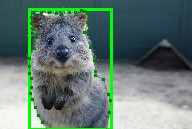
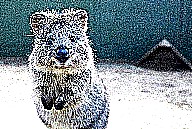
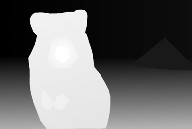
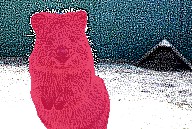
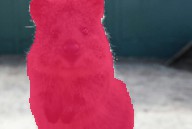
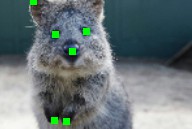
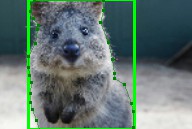
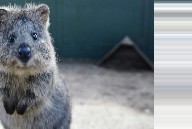
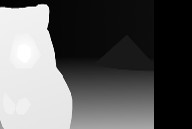
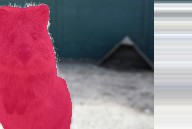
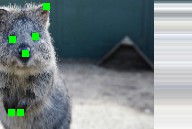
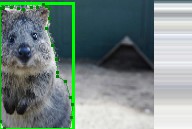
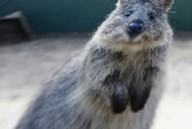
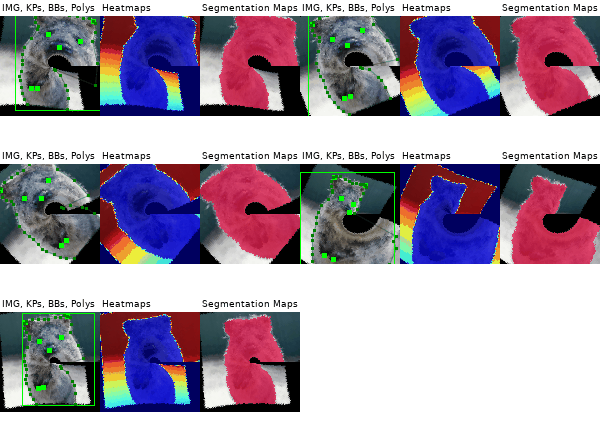
This python library helps you with augmenting images for your machine learning projects. It converts a set of input images into a new, much larger set of slightly altered images.


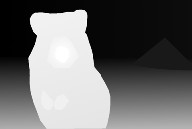
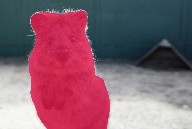
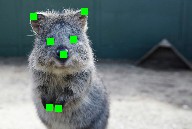
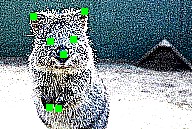
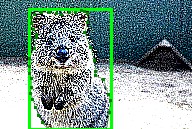
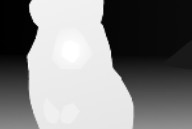
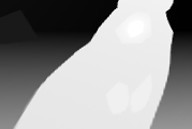
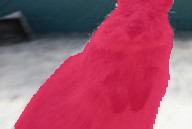
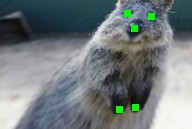
| Image | Heatmaps | Seg. Maps | Keypoints | Bounding Boxes, Polygons |
|
|---|---|---|---|---|---|
| Original Input | 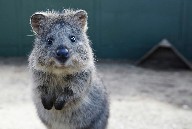 |
 |
 |
 |
 |
| Gauss. Noise + Contrast + Sharpen |
 |
 |
 |
 |
 |
| Affine | 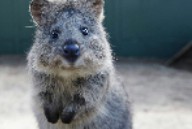 |
 |
 |
 |
 |
| Crop + Pad |
 |
 |
 |
 |
 |
| Fliplr + Perspective |
 |
 |
 |
 |
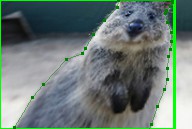 |
More (strong) example augmentations of one input image:
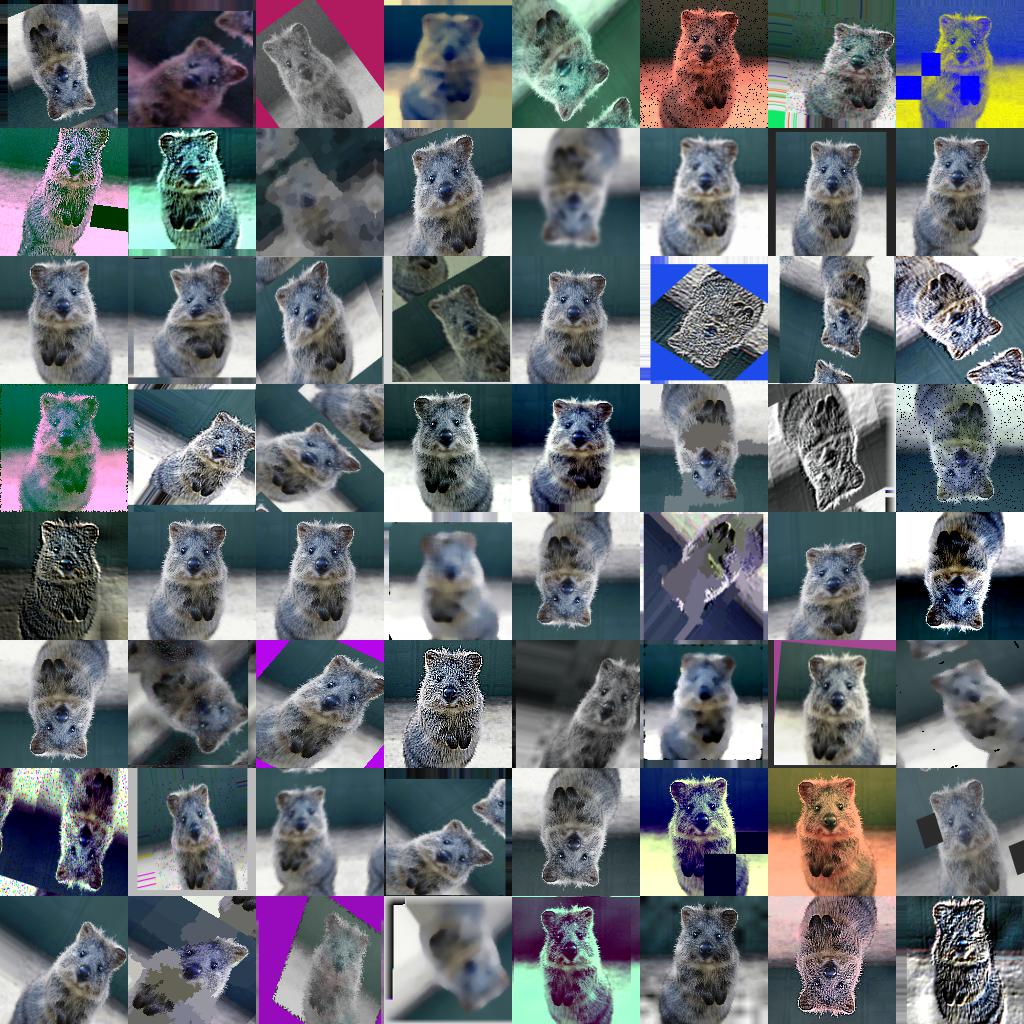
Table of Contents
Features
- Many augmentation techniques
- E.g. affine transformations, perspective transformations, contrast changes, gaussian noise, dropout of regions, hue/saturation changes, cropping/padding, blurring, ...
- Optimized for high performance
- Easy to apply augmentations only to some images
- Easy to apply augmentations in random order
- Support for
- Images (full support for uint8, for other dtypes see documentation)
- Heatmaps (float32), Segmentation Maps (int), Masks (bool)
- May be smaller/larger than their corresponding images. No extra lines of code needed for e.g. crop.
- Keypoints/Landmarks (int/float coordinates)
- Bounding Boxes (int/float coordinates)
- Polygons (int/float coordinates)
- Line Strings (int/float coordinates)
- Automatic alignment of sampled random values
- Example: Rotate image and segmentation map on it by the same value sampled from
uniform(-10°, 45°). (0 extra lines of code.)
- Example: Rotate image and segmentation map on it by the same value sampled from
- Probability distributions as parameters
- Example: Rotate images by values sampled from
uniform(-10°, 45°). - Example: Rotate images by values sampled from
ABS(N(0, 20.0))*(1+B(1.0, 1.0))", whereABS(.)is the absolute function,N(.)the gaussian distribution andB(.)the beta distribution.
- Example: Rotate images by values sampled from
- Many helper functions
- Example: Draw heatmaps, segmentation maps, keypoints, bounding boxes, ...
- Example: Scale segmentation maps, average/max pool of images/maps, pad images to aspect ratios (e.g. to square them)
- Example: Convert keypoints to distance maps, extract pixels within bounding boxes from images, clip polygon to the image plane, ...
- Support for augmentation on multiple CPU cores
Installation
The library supports python 2.7 and 3.4+.
Installation: Anaconda
To install the library in anaconda, perform the following commands:
bash
conda config --add channels conda-forge
conda install imgaug
You can deinstall the library again via conda remove imgaug.
Installation: pip
Then install imgaug either via pypi (can lag behind the github version):
bash
pip install imgaug
or install the latest version directly from github:
bash
pip install git+https://github.com/aleju/imgaug.git
For more details, see the install guide
To deinstall the library, just execute pip uninstall imgaug.
Documentation
Example jupyter notebooks: * Load and Augment an Image * Multicore Augmentation * Augment and work with: Keypoints/Landmarks, Bounding Boxes, Polygons, Line Strings, Heatmaps, Segmentation Maps
More notebooks: imgaug-doc/notebooks.
Example ReadTheDocs pages: * Quick example code on how to use the library * Overview of all Augmenters * API
More RTD documentation: imgaug.readthedocs.io.
All documentation related files of this project are hosted in the repository imgaug-doc.
Recent Changes
- 0.4.0: Added new augmenters, changed backend to batchwise augmentation, support for numpy 1.18 and python 3.8.
- 0.3.0: Reworked segmentation map augmentation, adapted to numpy 1.17+ random number sampling API, several new augmenters.
- 0.2.9: Added polygon augmentation, added line string augmentation, simplified augmentation interface.
- 0.2.8: Improved performance, dtype support and multicore augmentation.
See changelogs/ for more details.
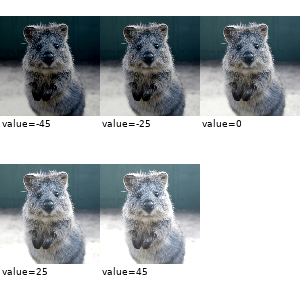
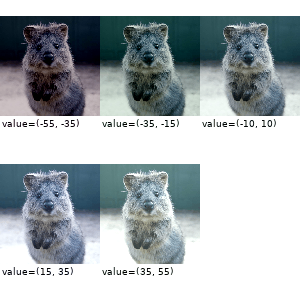
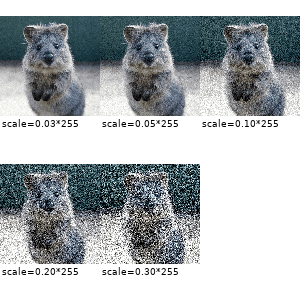
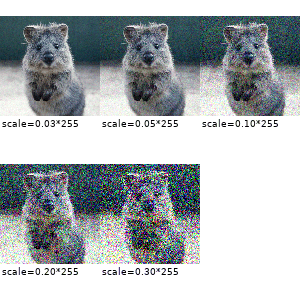
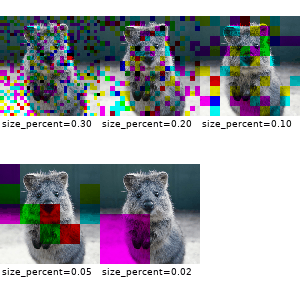
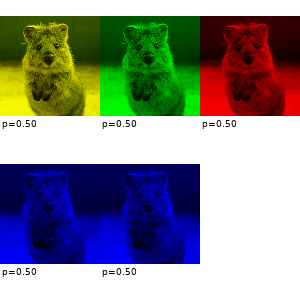
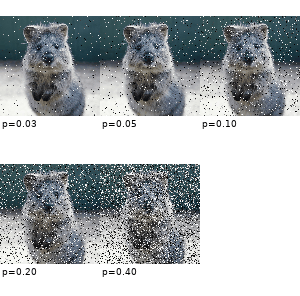
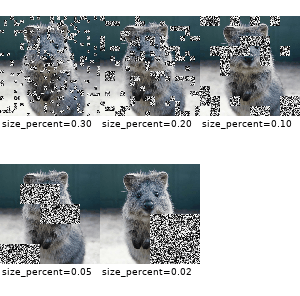
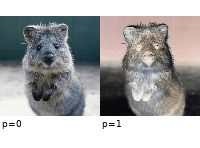
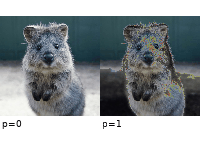
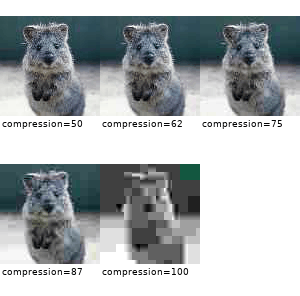
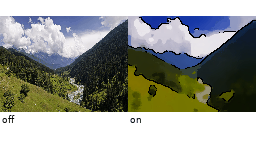
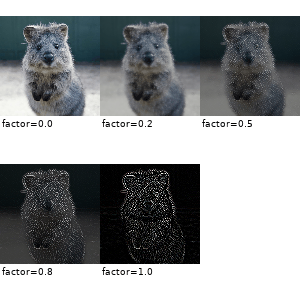
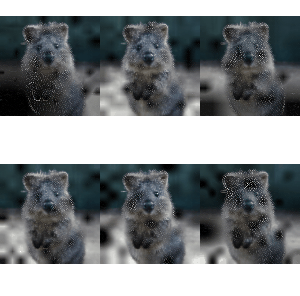
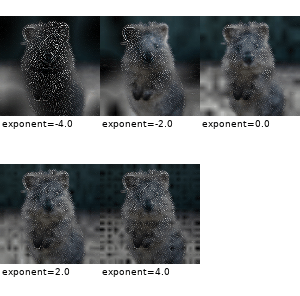
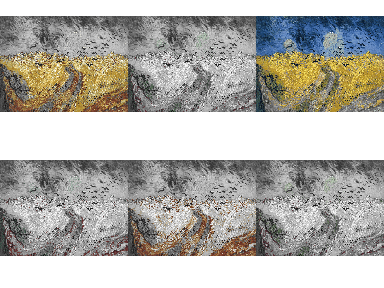
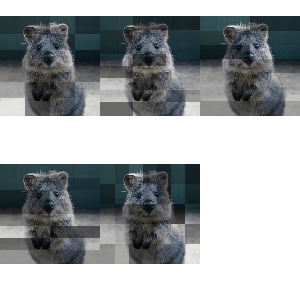
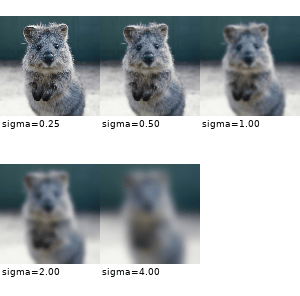
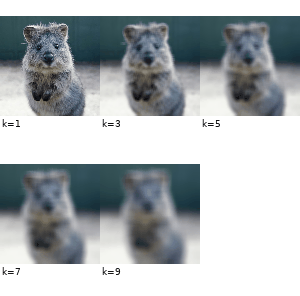
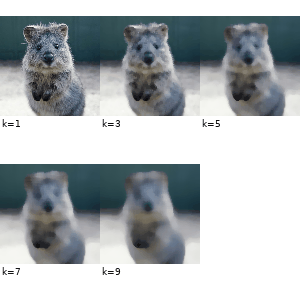
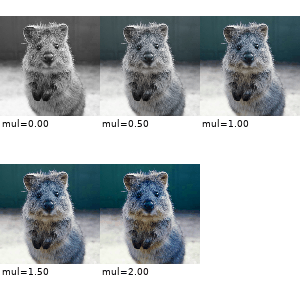
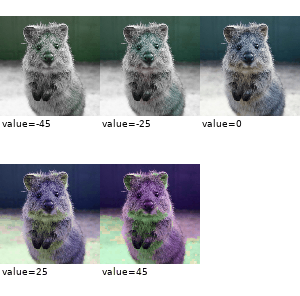
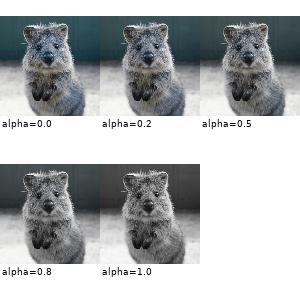
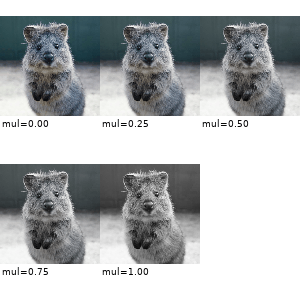
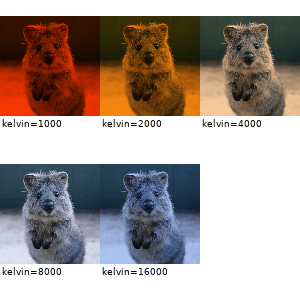
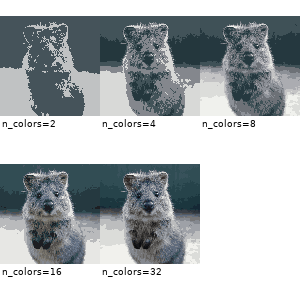
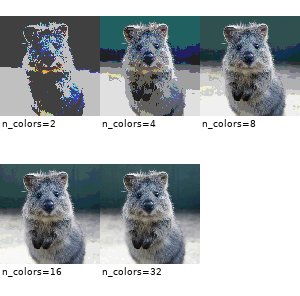
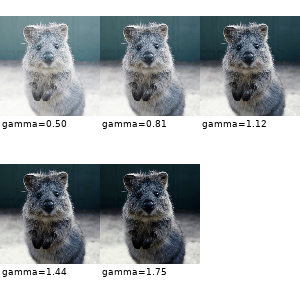
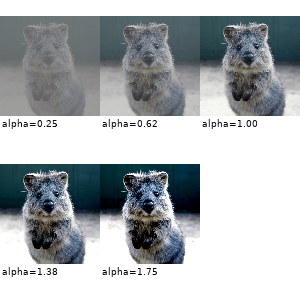
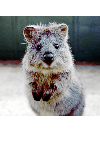
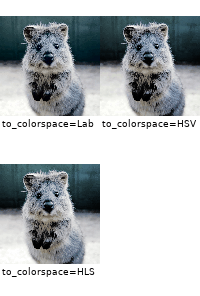
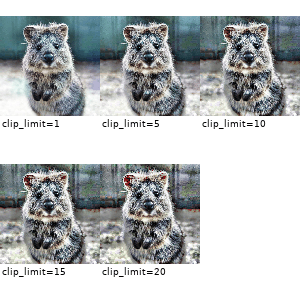
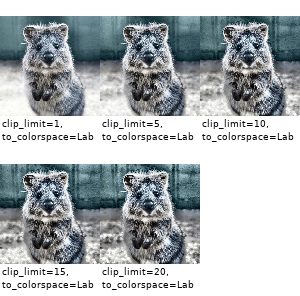
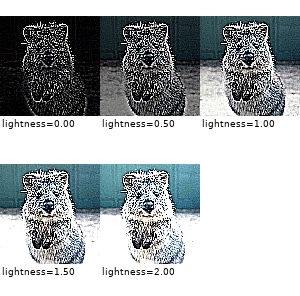
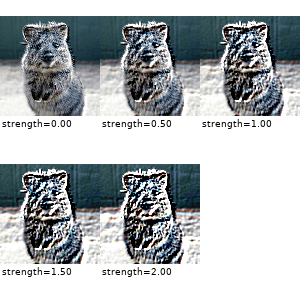
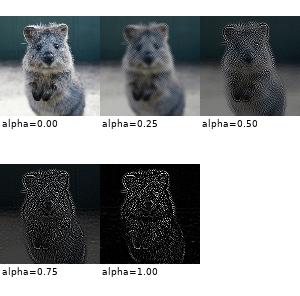
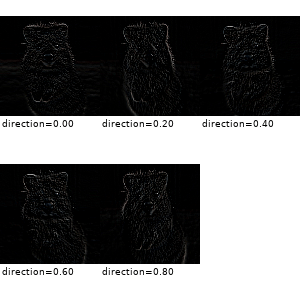
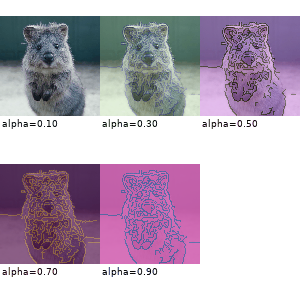
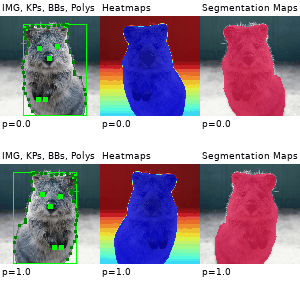
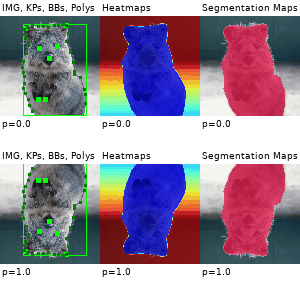
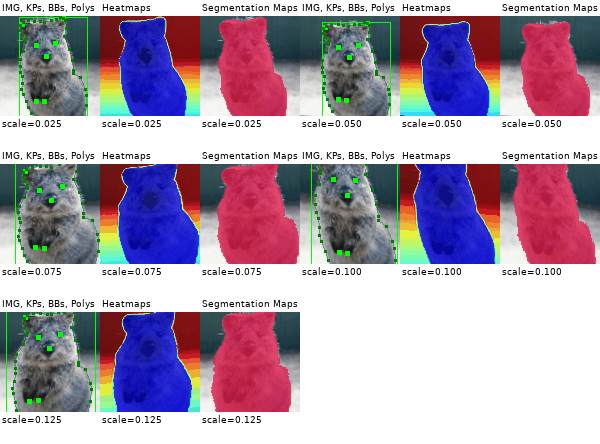
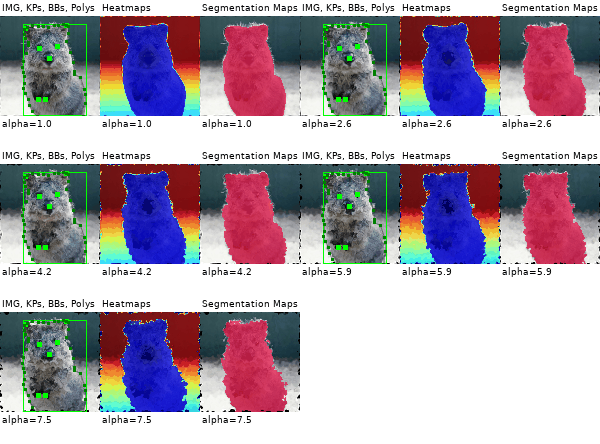
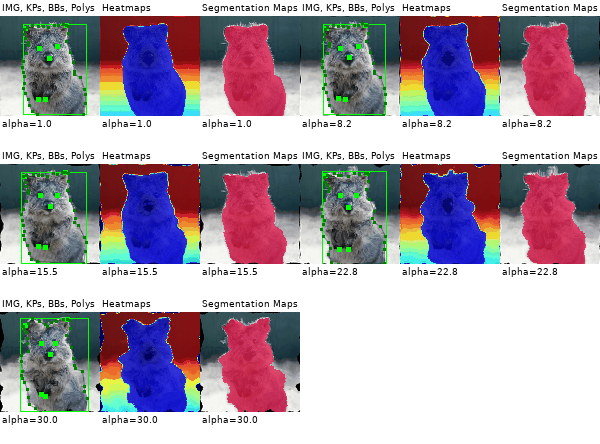
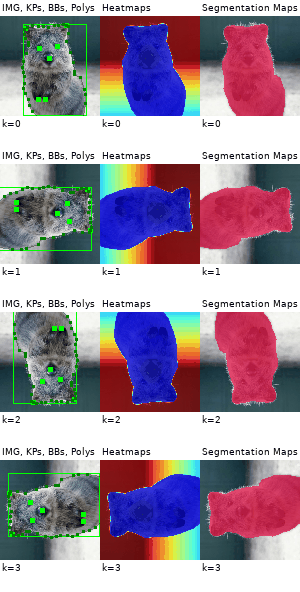
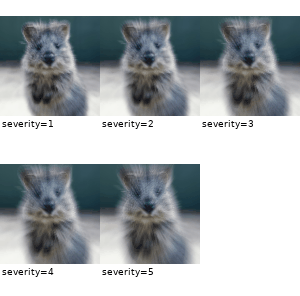
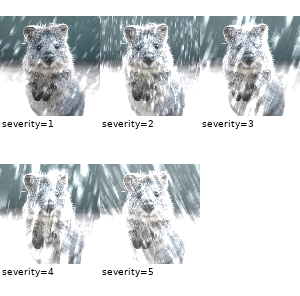
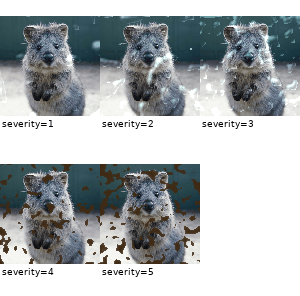
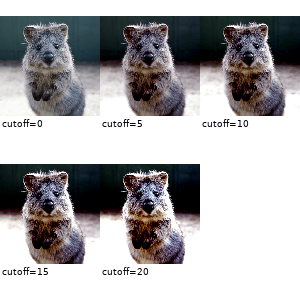
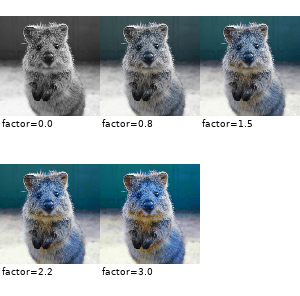
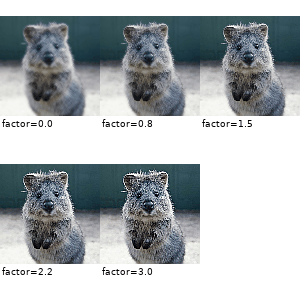
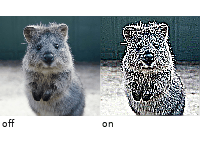
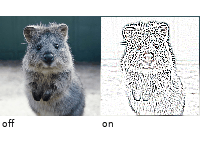
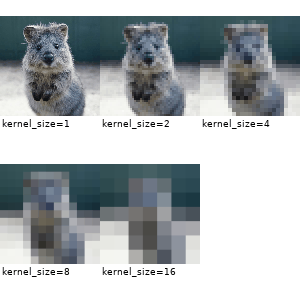
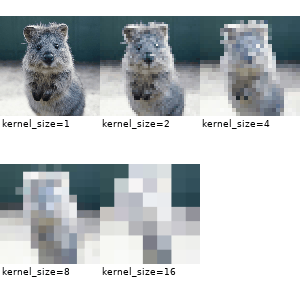
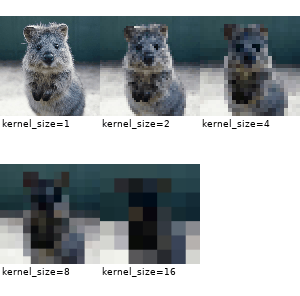
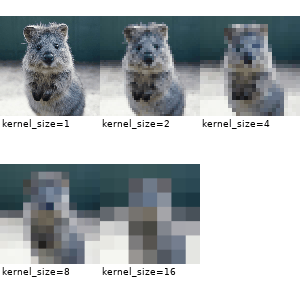
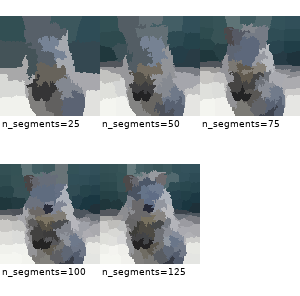
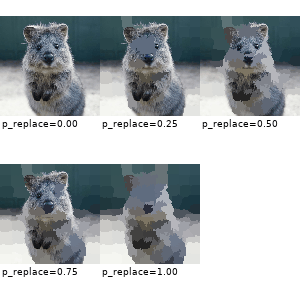
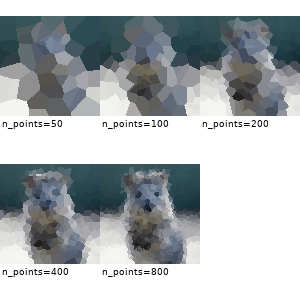
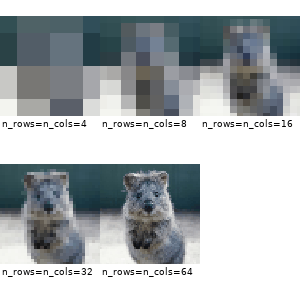
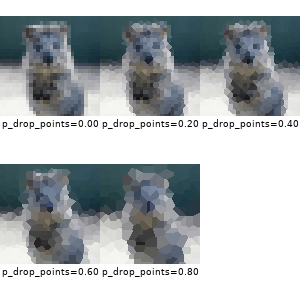
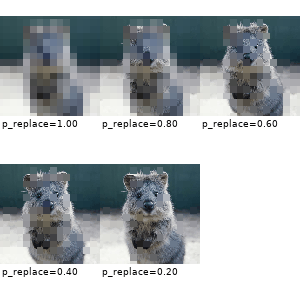
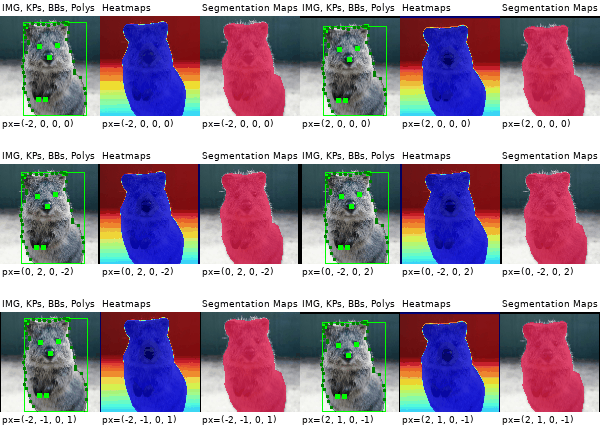
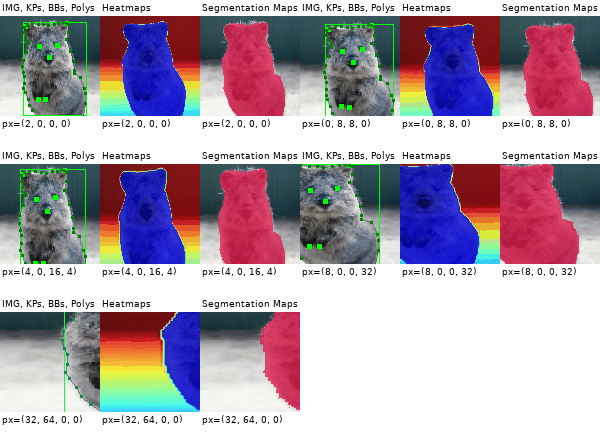
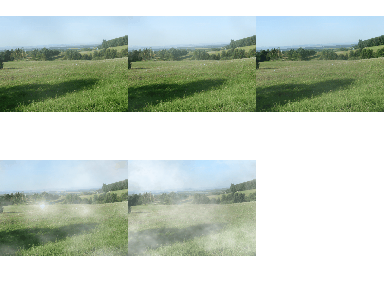
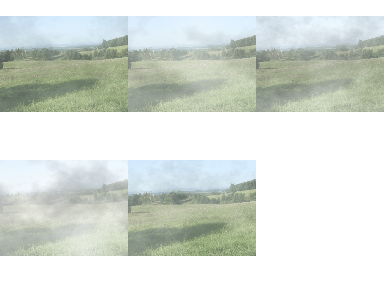
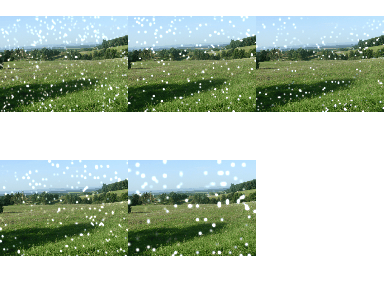
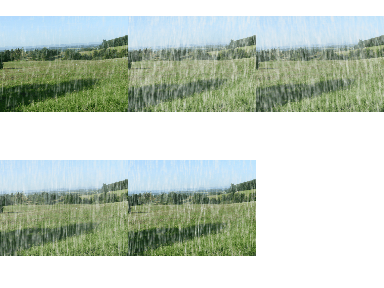
Example Images
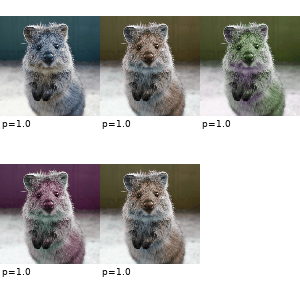
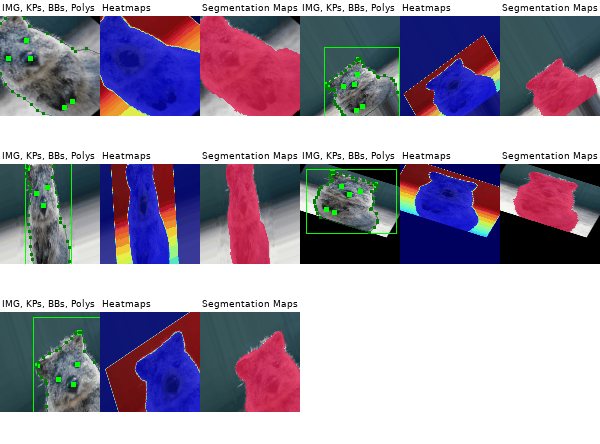
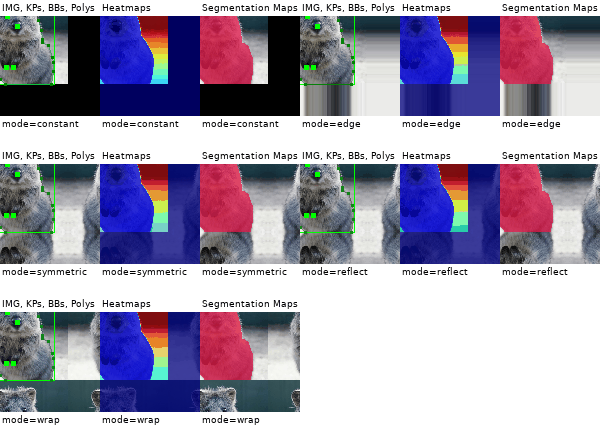
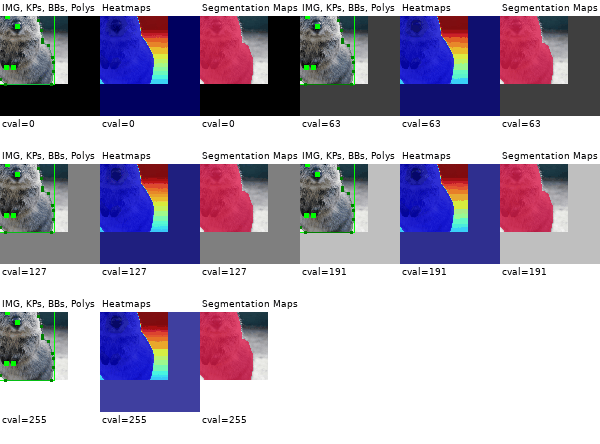
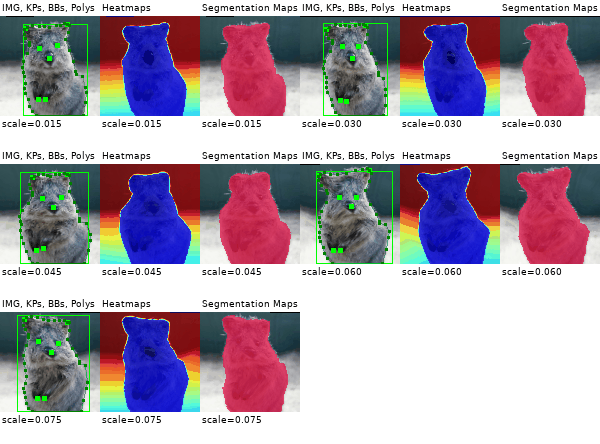
The images below show examples for most augmentation techniques.
Values written in the form (a, b) denote a uniform distribution,
i.e. the value is randomly picked from the interval [a, b].
Line strings are supported by (almost) all augmenters, but are not explicitly
visualized here.
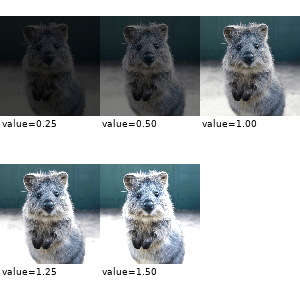
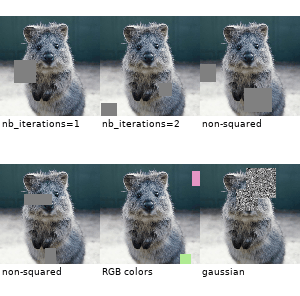
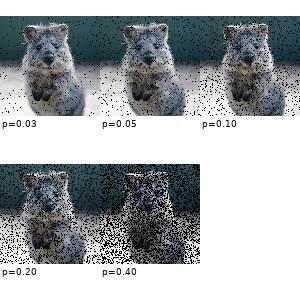
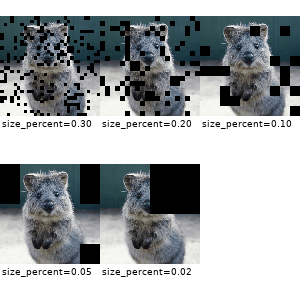
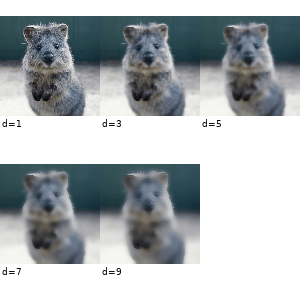
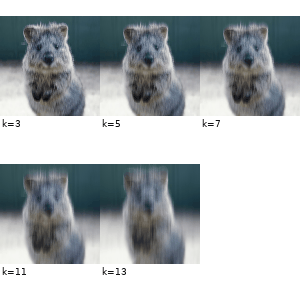
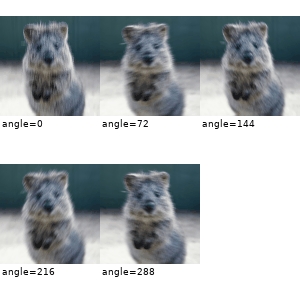
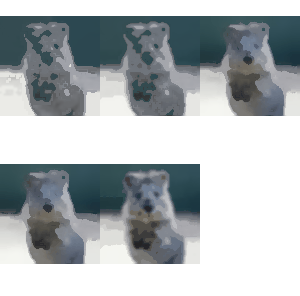
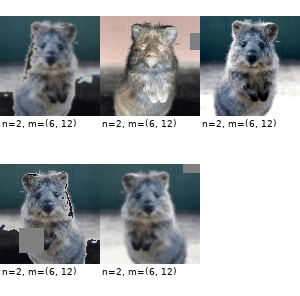
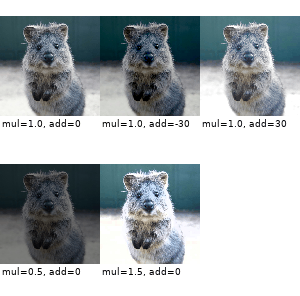
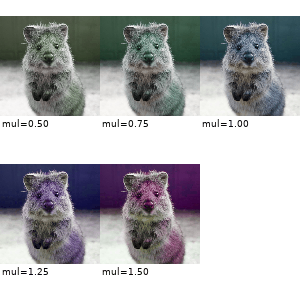
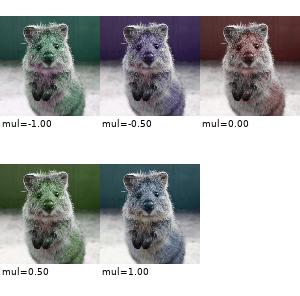
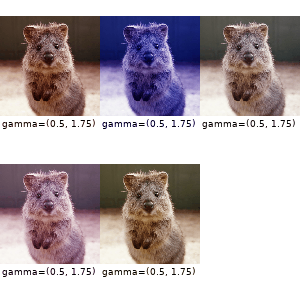
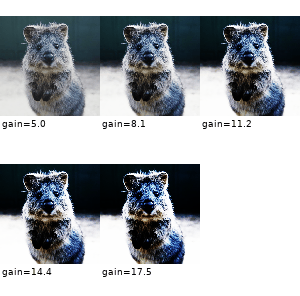
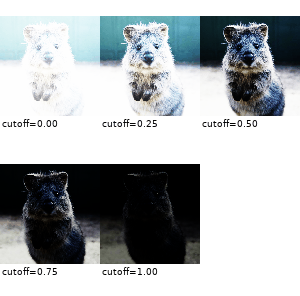
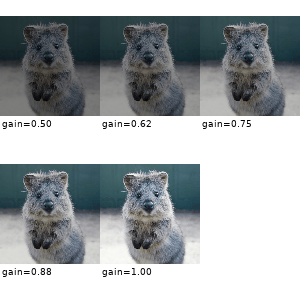
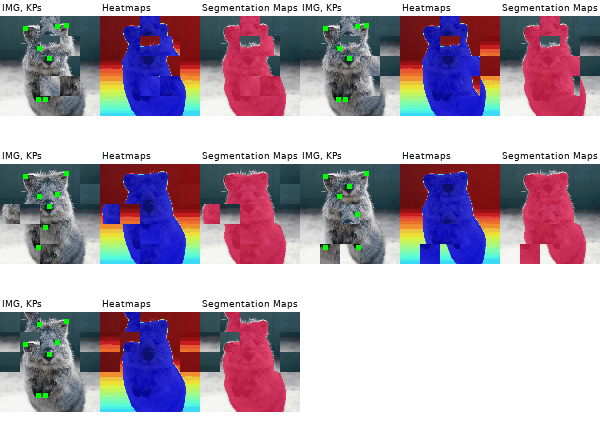
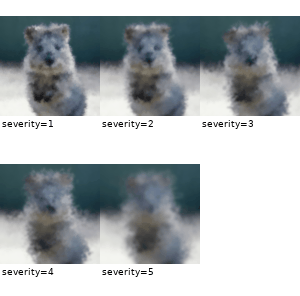
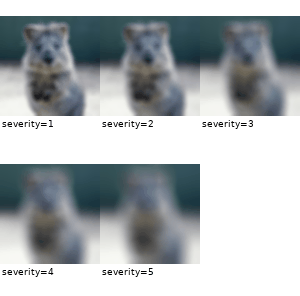
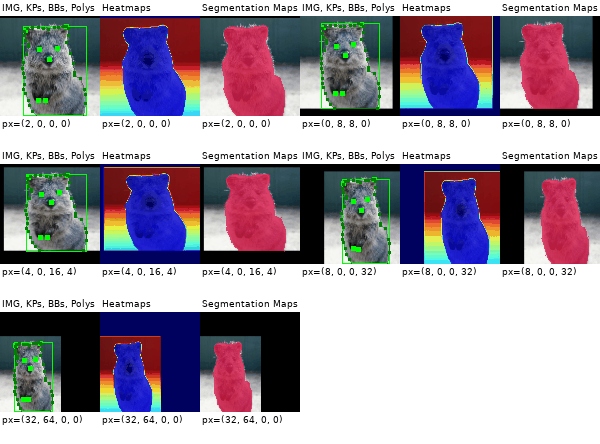
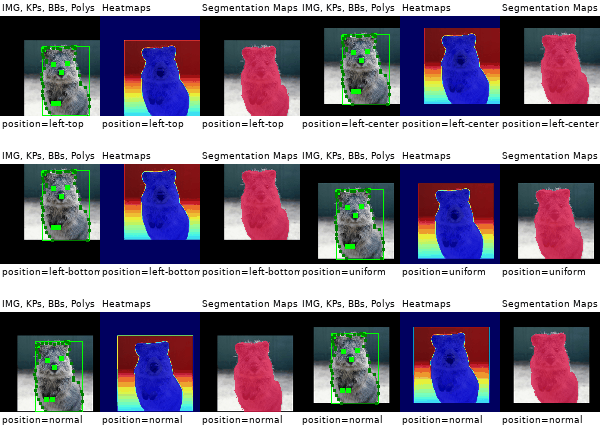
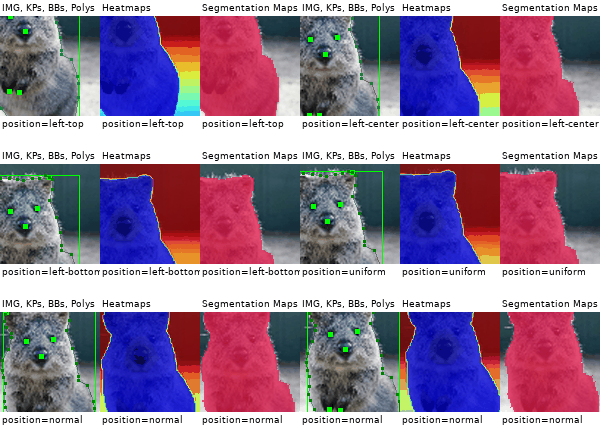
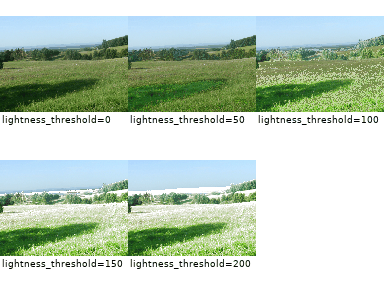
Code Examples
Example: Simple Training Setting
A standard machine learning situation. Train on batches of images and augment each batch via crop, horizontal flip ("Fliplr") and gaussian blur: ```python import numpy as np import imgaug.augmenters as iaa
def loadbatch(batchidx): # dummy function, implement this # Return a numpy array of shape (N, height, width, #channels) # or a list of (height, width, #channels) arrays (may have different image # sizes). # Images should be in RGB for colorspace augmentations. # (cv2.imread() returns BGR!) # Images should usually be in uint8 with values from 0-255. return np.zeros((128, 32, 32, 3), dtype=np.uint8) + (batch_idx % 255)
def trainonimages(images): # dummy function, implement this pass
Pipeline:
(1) Crop images from each side by 1-16px, do not resize the results
images back to the input size. Keep them at the cropped size.
(2) Horizontally flip 50% of the images.
(3) Blur images using a gaussian kernel with sigma between 0.0 and 3.0.
seq = iaa.Sequential([ iaa.Crop(px=(1, 16), keep_size=False), iaa.Fliplr(0.5), iaa.GaussianBlur(sigma=(0, 3.0)) ])
for batchidx in range(100): images = loadbatch(batchidx) imagesaug = seq(images=images) # done by the library trainonimages(images_aug) ```
Example: Very Complex Augmentation Pipeline
Apply a very heavy augmentation pipeline to images (used to create the image at the very top of this readme): ```python import numpy as np import imgaug as ia import imgaug.augmenters as iaa
random example images
images = np.random.randint(0, 255, (16, 128, 128, 3), dtype=np.uint8)
Sometimes(0.5, ...) applies the given augmenter in 50% of all cases,
e.g. Sometimes(0.5, GaussianBlur(0.3)) would blur roughly every second image.
sometimes = lambda aug: iaa.Sometimes(0.5, aug)
Define our sequence of augmentation steps that will be applied to every image
All augmenters with perchannel=0.5 will sample one value _per image
in 50% of all cases. In all other cases they will sample new values
per channel.
seq = iaa.Sequential( [ # apply the following augmenters to most images iaa.Fliplr(0.5), # horizontally flip 50% of all images iaa.Flipud(0.2), # vertically flip 20% of all images # crop images by -5% to 10% of their height/width sometimes(iaa.CropAndPad( percent=(-0.05, 0.1), padmode=ia.ALL, padcval=(0, 255) )), sometimes(iaa.Affine( scale={"x": (0.8, 1.2), "y": (0.8, 1.2)}, # scale images to 80-120% of their size, individually per axis translatepercent={"x": (-0.2, 0.2), "y": (-0.2, 0.2)}, # translate by -20 to +20 percent (per axis) rotate=(-45, 45), # rotate by -45 to +45 degrees shear=(-16, 16), # shear by -16 to +16 degrees order=[0, 1], # use nearest neighbour or bilinear interpolation (fast) cval=(0, 255), # if mode is constant, use a cval between 0 and 255 mode=ia.ALL # use any of scikit-image's warping modes (see 2nd image from the top for examples) )), # execute 0 to 5 of the following (less important) augmenters per image # don't execute all of them, as that would often be way too strong iaa.SomeOf((0, 5), [ sometimes(iaa.Superpixels(preplace=(0, 1.0), nsegments=(20, 200))), # convert images into their superpixel representation iaa.OneOf([ iaa.GaussianBlur((0, 3.0)), # blur images with a sigma between 0 and 3.0 iaa.AverageBlur(k=(2, 7)), # blur image using local means with kernel sizes between 2 and 7 iaa.MedianBlur(k=(3, 11)), # blur image using local medians with kernel sizes between 2 and 7 ]), iaa.Sharpen(alpha=(0, 1.0), lightness=(0.75, 1.5)), # sharpen images iaa.Emboss(alpha=(0, 1.0), strength=(0, 2.0)), # emboss images # search either for all edges or for directed edges, # blend the result with the original image using a blobby mask iaa.SimplexNoiseAlpha(iaa.OneOf([ iaa.EdgeDetect(alpha=(0.5, 1.0)), iaa.DirectedEdgeDetect(alpha=(0.5, 1.0), direction=(0.0, 1.0)), ])), iaa.AdditiveGaussianNoise(loc=0, scale=(0.0, 0.05*255), perchannel=0.5), # add gaussian noise to images iaa.OneOf([ iaa.Dropout((0.01, 0.1), perchannel=0.5), # randomly remove up to 10% of the pixels iaa.CoarseDropout((0.03, 0.15), sizepercent=(0.02, 0.05), perchannel=0.2), ]), iaa.Invert(0.05, perchannel=True), # invert color channels iaa.Add((-10, 10), perchannel=0.5), # change brightness of images (by -10 to 10 of original value) iaa.AddToHueAndSaturation((-20, 20)), # change hue and saturation # either change the brightness of the whole image (sometimes # per channel) or change the brightness of subareas iaa.OneOf([ iaa.Multiply((0.5, 1.5), perchannel=0.5), iaa.FrequencyNoiseAlpha( exponent=(-4, 0), first=iaa.Multiply((0.5, 1.5), perchannel=True), second=iaa.LinearContrast((0.5, 2.0)) ) ]), iaa.LinearContrast((0.5, 2.0), perchannel=0.5), # improve or worsen the contrast iaa.Grayscale(alpha=(0.0, 1.0)), sometimes(iaa.ElasticTransformation(alpha=(0.5, 3.5), sigma=0.25)), # move pixels locally around (with random strengths) sometimes(iaa.PiecewiseAffine(scale=(0.01, 0.05))), # sometimes move parts of the image around sometimes(iaa.PerspectiveTransform(scale=(0.01, 0.1))) ], randomorder=True ) ], randomorder=True ) images_aug = seq(images=images) ```
Example: Augment Images and Keypoints
Augment images and keypoints/landmarks on the same images: ```python import numpy as np import imgaug.augmenters as iaa
images = np.zeros((2, 128, 128, 3), dtype=np.uint8) # two example images images[:, 64, 64, :] = 255 points = [ [(10.5, 20.5)], # points on first image [(50.5, 50.5), (60.5, 60.5), (70.5, 70.5)] # points on second image ]
seq = iaa.Sequential([ iaa.AdditiveGaussianNoise(scale=0.05*255), iaa.Affine(translate_px={"x": (1, 5)}) ])
augment keypoints and images
imagesaug, pointsaug = seq(images=images, keypoints=points)
print("Image 1 center", np.argmax(imagesaug[0, 64, 64:64+6, 0]))
print("Image 2 center", np.argmax(imagesaug[1, 64, 64:64+6, 0]))
print("Points 1", pointsaug[0])
print("Points 2", pointsaug[1])
``
Note that all coordinates inimgaugare subpixel-accurate, which is
whyx=0.5, y=0.5` denotes the center of the top left pixel.
Example: Augment Images and Bounding Boxes
```python import numpy as np import imgaug as ia import imgaug.augmenters as iaa
images = np.zeros((2, 128, 128, 3), dtype=np.uint8) # two example images images[:, 64, 64, :] = 255 bbs = [ [ia.BoundingBox(x1=10.5, y1=15.5, x2=30.5, y2=50.5)], [ia.BoundingBox(x1=10.5, y1=20.5, x2=50.5, y2=50.5), ia.BoundingBox(x1=40.5, y1=75.5, x2=70.5, y2=100.5)] ]
seq = iaa.Sequential([ iaa.AdditiveGaussianNoise(scale=0.05*255), iaa.Affine(translate_px={"x": (1, 5)}) ])
imagesaug, bbsaug = seq(images=images, bounding_boxes=bbs) ```
Example: Augment Images and Polygons
```python import numpy as np import imgaug as ia import imgaug.augmenters as iaa
images = np.zeros((2, 128, 128, 3), dtype=np.uint8) # two example images images[:, 64, 64, :] = 255 polygons = [ [ia.Polygon([(10.5, 10.5), (50.5, 10.5), (50.5, 50.5)])], [ia.Polygon([(0.0, 64.5), (64.5, 0.0), (128.0, 128.0), (64.5, 128.0)])] ]
seq = iaa.Sequential([ iaa.AdditiveGaussianNoise(scale=0.05*255), iaa.Affine(translate_px={"x": (1, 5)}) ])
imagesaug, polygonsaug = seq(images=images, polygons=polygons) ```
Example: Augment Images and LineStrings
LineStrings are similar to polygons, but are not closed, may intersect with themselves and don't have an inner area. ```python import numpy as np import imgaug as ia import imgaug.augmenters as iaa
images = np.zeros((2, 128, 128, 3), dtype=np.uint8) # two example images images[:, 64, 64, :] = 255 ls = [ [ia.LineString([(10.5, 10.5), (50.5, 10.5), (50.5, 50.5)])], [ia.LineString([(0.0, 64.5), (64.5, 0.0), (128.0, 128.0), (64.5, 128.0), (128.0, 0.0)])] ]
seq = iaa.Sequential([ iaa.AdditiveGaussianNoise(scale=0.05*255), iaa.Affine(translate_px={"x": (1, 5)}) ])
imagesaug, lsaug = seq(images=images, line_strings=ls) ```
Example: Augment Images and Heatmaps
Heatmaps are dense float arrays with values between 0.0 and 1.0.
They can be used e.g. when training models to predict facial landmark
locations. Note that the heatmaps here have lower height and width than the
images. imgaug handles that case automatically. The crop pixel amounts will
be halved for the heatmaps.
```python import numpy as np import imgaug.augmenters as iaa
Standard scenario: You have N RGB-images and additionally 21 heatmaps per
image. You want to augment each image and its heatmaps identically.
images = np.random.randint(0, 255, (16, 128, 128, 3), dtype=np.uint8) heatmaps = np.random.random(size=(16, 64, 64, 1)).astype(np.float32)
seq = iaa.Sequential([ iaa.GaussianBlur((0, 3.0)), iaa.Affine(translate_px={"x": (-40, 40)}), iaa.Crop(px=(0, 10)) ])
imagesaug, heatmapsaug = seq(images=images, heatmaps=heatmaps) ```
Example: Augment Images and Segmentation Maps
This is similar to heatmaps, but the dense arrays have dtype int32.
Operations such as resizing will automatically use nearest neighbour
interpolation.
```python import numpy as np import imgaug.augmenters as iaa
Standard scenario: You have N=16 RGB-images and additionally one segmentation
map per image. You want to augment each image and its heatmaps identically.
images = np.random.randint(0, 255, (16, 128, 128, 3), dtype=np.uint8) segmaps = np.random.randint(0, 10, size=(16, 64, 64, 1), dtype=np.int32)
seq = iaa.Sequential([ iaa.GaussianBlur((0, 3.0)), iaa.Affine(translate_px={"x": (-40, 40)}), iaa.Crop(px=(0, 10)) ])
imagesaug, segmapsaug = seq(images=images, segmentation_maps=segmaps) ```
Example: Visualize Augmented Images
Quickly show example results of your augmentation sequence: ```python import numpy as np import imgaug.augmenters as iaa
images = np.random.randint(0, 255, (16, 128, 128, 3), dtype=np.uint8) seq = iaa.Sequential([iaa.Fliplr(0.5), iaa.GaussianBlur((0, 3.0))])
Show an image with 88 augmented versions of image 0 and 88 augmented
versions of image 1. Identical augmentations will be applied to
image 0 and 1.
seq.show_grid([images[0], images[1]], cols=8, rows=8) ```
Example: Visualize Augmented Non-Image Data
imgaug contains many helper function, among these functions to quickly
visualize augmented non-image results, such as bounding boxes or heatmaps.
```python import numpy as np import imgaug as ia
image = np.zeros((64, 64, 3), dtype=np.uint8)
points
kps = [ia.Keypoint(x=10.5, y=20.5), ia.Keypoint(x=60.5, y=60.5)] kpsoi = ia.KeypointsOnImage(kps, shape=image.shape) imagewithkps = kpsoi.drawonimage(image, size=7, color=(0, 0, 255)) ia.imshow(imagewithkps)
bbs
bbsoi = ia.BoundingBoxesOnImage([ ia.BoundingBox(x1=10.5, y1=20.5, x2=50.5, y2=30.5) ], shape=image.shape) imagewithbbs = bbsoi.drawonimage(image) imagewithbbs = ia.BoundingBox( x1=50.5, y1=10.5, x2=100.5, y2=16.5 ).drawonimage(imagewithbbs, color=(255, 0, 0), size=3) ia.imshow(imagewithbbs)
polygons
psoi = ia.PolygonsOnImage([ ia.Polygon([(10.5, 20.5), (50.5, 30.5), (10.5, 50.5)]) ], shape=image.shape) imagewithpolys = psoi.drawonimage( image, alphapoints=0, alphaface=0.5, colorlines=(255, 0, 0)) ia.imshow(imagewith_polys)
heatmaps
hms = ia.HeatmapsOnImage(np.random.random(size=(32, 32, 1)).astype(np.float32), shape=image.shape) imagewithhms = hms.drawonimage(image) ia.imshow(imagewithhms) ```
LineStrings and segmentation maps support similar methods as shown above.
Example: Using Augmenters Only Once
While the interface is adapted towards re-using instances of augmenters many times, you are also free to use them only once. The overhead to instantiate the augmenters each time is usually negligible.
```python from imgaug import augmenters as iaa import numpy as np
images = np.random.randint(0, 255, (16, 128, 128, 3), dtype=np.uint8)
always horizontally flip each input image
images_aug = iaa.Fliplr(1.0)(images=images)
vertically flip each input image with 90% probability
images_aug = iaa.Flipud(0.9)(images=images)
blur 50% of all images using a gaussian kernel with a sigma of 3.0
images_aug = iaa.Sometimes(0.5, iaa.GaussianBlur(3.0))(images=images) ```
Example: Multicore Augmentation
Images can be augmented in background processes using the
method augment_batches(batches, background=True), where batches is
a list/generator of
imgaug.augmentables.batches.UnnormalizedBatch
or
imgaug.augmentables.batches.Batch.
The following example augments a list of image batches in the background:
```python
import skimage.data
import imgaug as ia
import imgaug.augmenters as iaa
from imgaug.augmentables.batches import UnnormalizedBatch
Number of batches and batch size for this example
nbbatches = 10 batchsize = 32
Example augmentation sequence to run in the background
augseq = iaa.Sequential([ iaa.Fliplr(0.5), iaa.CoarseDropout(p=0.1, size_percent=0.1) ])
For simplicity, we use the same image here many times
astronaut = skimage.data.astronaut() astronaut = ia.imresizesingleimage(astronaut, (64, 64))
Make batches out of the example image (here: 10 batches, each 32 times
the example image)
batches = [] for _ in range(nbbatches): batches.append(UnnormalizedBatch(images=[astronaut] * batchsize))
Show the augmented images.
Note that augment_batches() returns a generator.
for imagesaug in augseq.augmentbatches(batches, background=True): ia.imshow(ia.drawgrid(imagesaug.images_aug, cols=8)) ```
If you need more control over the background augmentation, e.g. to set seeds, control the number of used CPU cores or constraint the memory usage, see the corresponding multicore augmentation notebook or the API about Augmenter.pool() and imgaug.multicore.Pool.
Example: Probability Distributions as Parameters
Most augmenters support using tuples (a, b) as a shortcut to denote
uniform(a, b) or lists [a, b, c] to denote a set of allowed values from
which one will be picked randomly. If you require more complex probability
distributions (e.g. gaussians, truncated gaussians or poisson distributions)
you can use stochastic parameters from imgaug.parameters:
```python import numpy as np from imgaug import augmenters as iaa from imgaug import parameters as iap
images = np.random.randint(0, 255, (16, 128, 128, 3), dtype=np.uint8)
Blur by a value sigma which is sampled from a uniform distribution
of range 10.1 <= x < 13.0.
The convenience shortcut for this is: GaussianBlur((10.1, 13.0))
blurer = iaa.GaussianBlur(10 + iap.Uniform(0.1, 3.0)) images_aug = blurer(images=images)
Blur by a value sigma which is sampled from a gaussian distribution
N(1.0, 0.1), i.e. sample a value that is usually around 1.0.
Clip the resulting value so that it never gets below 0.1 or above 3.0.
blurer = iaa.GaussianBlur(iap.Clip(iap.Normal(1.0, 0.1), 0.1, 3.0)) images_aug = blurer(images=images) ```
There are many more probability distributions in the library, e.g. truncated gaussian distribution, poisson distribution or beta distribution.
Example: WithChannels
Apply an augmenter only to specific image channels: ```python import numpy as np import imgaug.augmenters as iaa
fake RGB images
images = np.random.randint(0, 255, (16, 128, 128, 3), dtype=np.uint8)
add a random value from the range (-30, 30) to the first two channels of
input images (e.g. to the R and G channels)
aug = iaa.WithChannels( channels=[0, 1], children=iaa.Add((-30, 30)) )
images_aug = aug(images=images) ```
Citation
If this library has helped you during your research, feel free to cite it:
latex
@misc{imgaug,
  author = {Jung, Alexander B.
            and Wada, Kentaro
            and Crall, Jon
            and Tanaka, Satoshi
            and Graving, Jake
            and Reinders, Christoph
            and Yadav, Sarthak
            and Banerjee, Joy
            and Vecsei, Gábor
            and Kraft, Adam
            and Rui, Zheng
            and Borovec, Jirka
            and Vallentin, Christian
            and Zhydenko, Semen
            and Pfeiffer, Kilian
            and Cook, Ben
            and Fernández, Ismael
            and De Rainville, François-Michel
            and Weng, Chi-Hung
            and Ayala-Acevedo, Abner
            and Meudec, Raphael
            and Laporte, Matias
            and others},
  title = {{imgaug}},
  howpublished = {\url{https://github.com/aleju/imgaug}},
  year = {2020},
  note = {Online; accessed 01-Feb-2020}
}
Owner
- Name: Alexander Jung
- Login: aleju
- Kind: user
- Location: Germany
- Repositories: 24
- Profile: https://github.com/aleju
GitHub Events
Total
- Issues event: 4
- Watch event: 333
- Issue comment event: 9
- Pull request event: 9
- Fork event: 49
Last Year
- Issues event: 4
- Watch event: 333
- Issue comment event: 9
- Pull request event: 9
- Fork event: 49
Committers
Last synced: about 1 year ago
Top Committers
| Name | Commits | |
|---|---|---|
| aleju | k****t@a****e | 2,473 |
| Alexander Jung | a****g@z****m | 66 |
| Kentaro Wada | w****a@g****m | 17 |
| joncrall | e****c@g****m | 13 |
| Francois-Michel De Rainville | f****e@i****t | 5 |
| Jacob Graving | j****g@g****m | 4 |
| Satoshi Tanaka | s****0@g****m | 4 |
| gregchu | g****u@g****m | 3 |
| druzhinin | d****n@s****m | 3 |
| Christoph Reinders | c****s@o****e | 3 |
| SarthakYadav | s****3@g****m | 3 |
| Rui | r****y@g****m | 2 |
| Pavel Taufer | p****r@c****m | 2 |
| Joy Banerjee | 3****8 | 2 |
| Jirka | j****c@s****z | 2 |
| Gábor Vecsei | v****x@g****m | 2 |
| Adam Kraft | a****t | 2 |
| Abner Ayala-Acevedo | a****o@g****m | 1 |
| Chi-Hung Weng | c****g@g****e | 1 |
| François-Michel De Rainville | f****e@g****m | 1 |
| Kacper Kania | k****5@g****m | 1 |
| kshramt | k****t@e****m | 1 |
| austin.doolittle | a****e@g****m | 1 |
| Sun Yitao | s****8@g****m | 1 |
| Oliver Coleman | o****n@a****u | 1 |
| J. Duane Northcutt | d****t@g****m | 1 |
| Ismael Fernández | i****_@c****x | 1 |
| Bruno | b****e@u****h | 1 |
| Ben Cook | j****k@g****m | 1 |
| Kilian Pfeiffer | k****r@r****e | 1 |
| and 6 more... | ||
Committer Domains (Top 20 + Academic)
Issues and Pull Requests
Last synced: 11 months ago
All Time
- Total issues: 112
- Total pull requests: 28
- Average time to close issues: 6 months
- Average time to close pull requests: 3 months
- Total issue authors: 107
- Total pull request authors: 26
- Average comments per issue: 2.2
- Average comments per pull request: 0.39
- Merged pull requests: 1
- Bot issues: 0
- Bot pull requests: 0
Past Year
- Issues: 2
- Pull requests: 11
- Average time to close issues: N/A
- Average time to close pull requests: less than a minute
- Issue authors: 2
- Pull request authors: 10
- Average comments per issue: 1.0
- Average comments per pull request: 0.45
- Merged pull requests: 0
- Bot issues: 0
- Bot pull requests: 0
Top Authors
Issue Authors
- KOLANICH (2)
- ffsEveryNameIsTaken (2)
- haniehm (2)
- marcown (2)
- MariaKalt (1)
- rmcgibbo (1)
- lantudou (1)
- microyybar (1)
- cqray1990 (1)
- wolfryu (1)
- boriswinner (1)
- sibi-venti (1)
- vonaviv (1)
- Erotemic (1)
- roey1rg (1)
Pull Request Authors
- GreatV (2)
- qja1998 (2)
- SoyabulIslamLincoln (2)
- kapiw04 (2)
- KOLANICH (2)
- erjel (2)
- beastless (2)
- rogerioagjr (2)
- Van-Trang2602 (2)
- ranshadmi (2)
- giacomomagini (2)
- LostBenjamin (1)
- UsamaHasan007 (1)
- half-potato (1)
- AlexanderRagnarsson (1)
Top Labels
Issue Labels
Pull Request Labels
Packages
- Total packages: 4
-
Total downloads:
- pypi 743,652 last-month
- Total docker downloads: 28,635
-
Total dependent packages: 102
(may contain duplicates) -
Total dependent repositories: 3,687
(may contain duplicates) - Total versions: 17
- Total maintainers: 2
pypi.org: imgaug
Image augmentation library for deep neural networks
- Homepage: https://github.com/aleju/imgaug
- Documentation: https://imgaug.readthedocs.io/
- License: MIT
-
Latest release: 0.4.0
published over 6 years ago
Rankings
Maintainers (1)
conda-forge.org: imgaug
This python library helps you with augmenting images for your machine learning projects. It converts a set of input images into a new, much larger set of slightly altered images.
- Homepage: https://github.com/aleju/imgaug
- License: MIT
-
Latest release: 0.4.0
published over 6 years ago
Rankings
spack.io: py-imgaug
A library for image augmentation in machine learning experiments, particularly convolutional neural networks. Supports the augmentation of images, keypoints/landmarks, bounding boxes, heatmaps and segmentation maps in a variety of different ways.
- Homepage: https://github.com/aleju/imgaug
- License: []
-
Latest release: 0.4.0
published over 4 years ago
Rankings
Maintainers (1)
anaconda.org: imgaug
This python library helps you with augmenting images for your machine learning projects. It converts a set of input images into a new, much larger set of slightly altered images.
- Homepage: https://github.com/aleju/imgaug
- License: MIT
-
Latest release: 0.4.0
published over 5 years ago
Rankings
Dependencies
- actions/cache v1 composite
- actions/checkout v2 composite
- actions/setup-python v2 composite
- actions/upload-artifact v2 composite
- actions/cache v1 composite
- actions/checkout v2 composite
- actions/setup-python v2 composite
- codecov/codecov-action v1 composite
- actions/cache v1 composite
- actions/checkout v2 composite
- actions/setup-python v2 composite
- codecov/codecov-action v1 composite
- Pillow *
- Shapely *
- imageio *
- imageio <=2.6.1
- matplotlib *
- numba *
- numpy >=1.15
- opencv-python-headless *
- scikit-image >=0.14.2
- scipy *
- six *
- imagecorruptions * test
- mock * test
- pytest >=3.0.5,<4.6.0 test
- pytest-subtests * test
- unittest2 * test
- xdoctest >=0.7.2 test