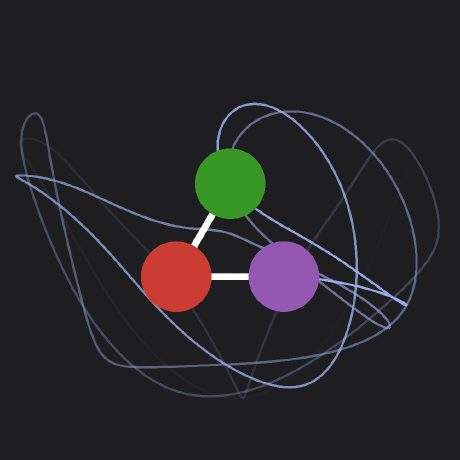
DynamicalSystems.jl
DynamicalSystems.jl: A Julia software library for chaos and nonlinear dynamics - Published in JOSS (2018)

GXBeam
GXBeam: A Pure Julia Implementation of Geometrically Exact Beam Theory - Published in JOSS (2022)

SHGYield
SHGYield - Published in JOSS (2017)
DynamicalSystemsBase
Definition of dynamical systems types and API for DynamicalSystems.jl

pyoptas
OpTaS: An optimization-based task specification library for trajectory optimization and model predictive control.
casadi
CasADi is a symbolic framework for numeric optimization implementing automatic differentiation in forward and reverse modes on sparse matrix-valued computational graphs. It supports self-contained C-code generation and interfaces state-of-the-art codes such as SUNDIALS, IPOPT etc. It can be used from C++, Python or Matlab/Octave.

complexitymeasures.jl
Estimators for probabilities, entropies, and other complexity measures derived from data in the context of nonlinear dynamics and complex systems


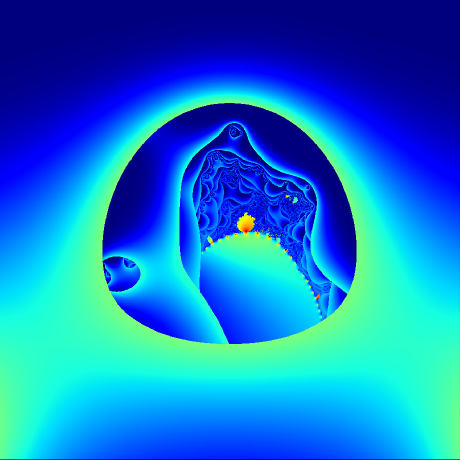
https://github.com/chakravala/fatou.jl
Fatou sets in Julia (Fractals, Newton basins, Mandelbrot)
epistasis
A Python API for estimating statistical high-order epistasis in genotype-phenotype maps.


https://github.com/1x-technologies/wb-humanoid-mpc
Realtime Physics-Based Procedural Loco-Manipulation Planning and Control
Attractors
Find attractors (and their basins) of dynamical systems. Perform global continuation. Study nonlocal stability (or resilience). Also tipping points functionality.

fans
FANS: an open-source, efficient, and parallel FFT-based homogenization solver designed to solve microscale multiphysics problems.

TimeseriesPrediction
Prediction of timeseries using methods of nonlinear dynamics and timeseries analysis